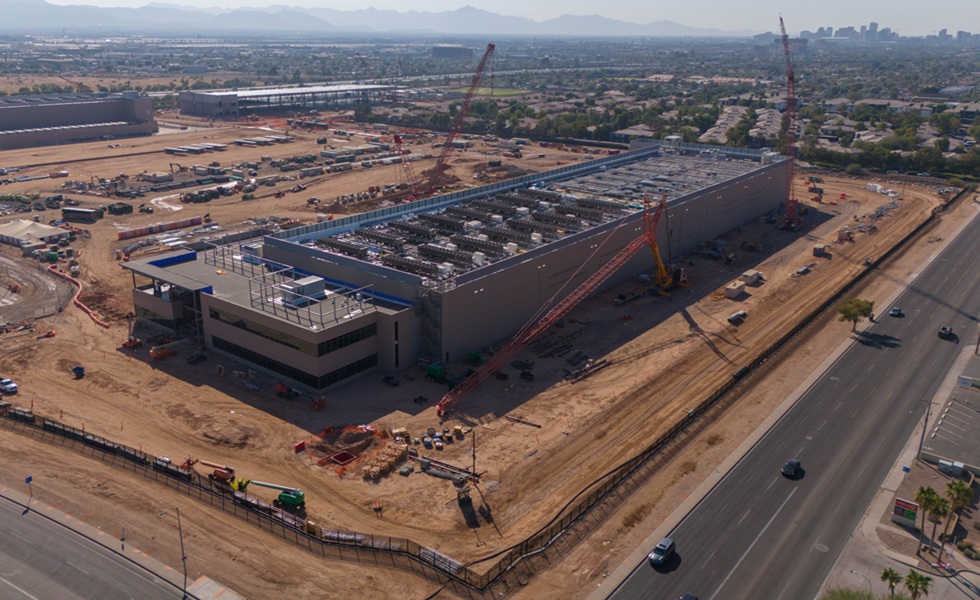
Thousands of new jobs are set to be created as the UK government accelerates its push to establish AI Growth Zones, a strategic initiative designed to revitalise local economies and position the country as a leader in artificial intelligence. Local and regional authorities are being urged to submit proposals to become hubs for AI infrastructure development, with a particular focus on deindustrialised areas that can be transformed into centres of technological innovation.
The move is a core part of the government’s AI Opportunities Action Plan, which has already attracted more than £14 billion in investment since its launch last month. The plan outlines a vision for integrating AI across key industries, streamlining public services, and expanding the country’s technological capabilities. This latest initiative takes that ambition further by identifying regions that have the potential to house large-scale AI infrastructure, including data centres and energy-intensive computing hubs.
A strategic focus on industrial transformation
Sites under consideration will be assessed for their ability to support AI expansion, with key criteria including existing access to high-power energy connections and proximity to potential sources of clean energy. The government has made it clear that locations with a strong industrial heritage stand to benefit, with the intention of repurposing disused manufacturing sites into AI-powered innovation hubs.
As part of the initiative, planning processes will be streamlined to allow for rapid infrastructure development. The government is also working with energy firms and data centre operators to scale these zones up to 500MW or more, enough to power approximately two million homes. This energy-intensive focus reflects the increasing demands of AI-driven technologies, from deep learning models to real-time data processing, and underscores the importance of sustainable power sources to ensure long-term viability.
Investment and industry interest grows
Interest is already building across multiple regions, with early proposals emerging from Scotland, Wales, the North East, and the North West. The government’s commitment to attracting private investment is expected to accelerate the rollout of AI Growth Zones, with energy firms and technology companies being invited to outline their plans for development.
Tees Valley Mayor Ben Houchen has signalled strong interest in securing AI investment for the region, highlighting its historical role in pioneering new technologies. “Teesside, Darlington and Hartlepool have long been at the cutting edge of industry, and we are ready to lead the way in AI as well,” he said. “We have the land, the power, and a track record of getting major projects off the ground quickly. This is a real opportunity to create well-paid, long-term jobs for local people.”
Scotland Office Minister Kirsty McNeill also pointed to the country’s track record in innovation and its world-leading universities as key assets that could drive AI adoption. “Scotland has always been a leader in pioneering advancements across engineering, medicine, and technology,” she said. “AI Growth Zones present an opportunity to harness that expertise and build on our industrial heritage.”
Balancing AI growth with sustainability
One of the most significant challenges facing AI infrastructure development is energy consumption. The creation of the AI Energy Council, co-chaired by the Science and Energy Secretaries, is intended to ensure that the power needs of AI Growth Zones align with the government’s broader clean energy strategy. Culham in Oxfordshire, home to the UK Atomic Energy Authority, has been selected as the first AI Growth Zone and will serve as a test bed for sustainable energy solutions, including fusion technology.
With the rapid expansion of AI, questions around data sovereignty, ethical governance, and regional economic inequality will become increasingly relevant. The government’s focus on establishing AI Growth Zones in deindustrialised areas signals an attempt to bridge these divides, fostering high-tech employment in regions that have historically struggled with economic decline.
The selection process for additional sites is expected to move quickly, with a formal announcement on the first wave of AI Growth Zones due in the summer. As businesses and local authorities make their bids, the success of the initiative will depend not just on securing investment but on ensuring that AI-led growth is inclusive, sustainable, and strategically positioned to benefit the entire UK economy.