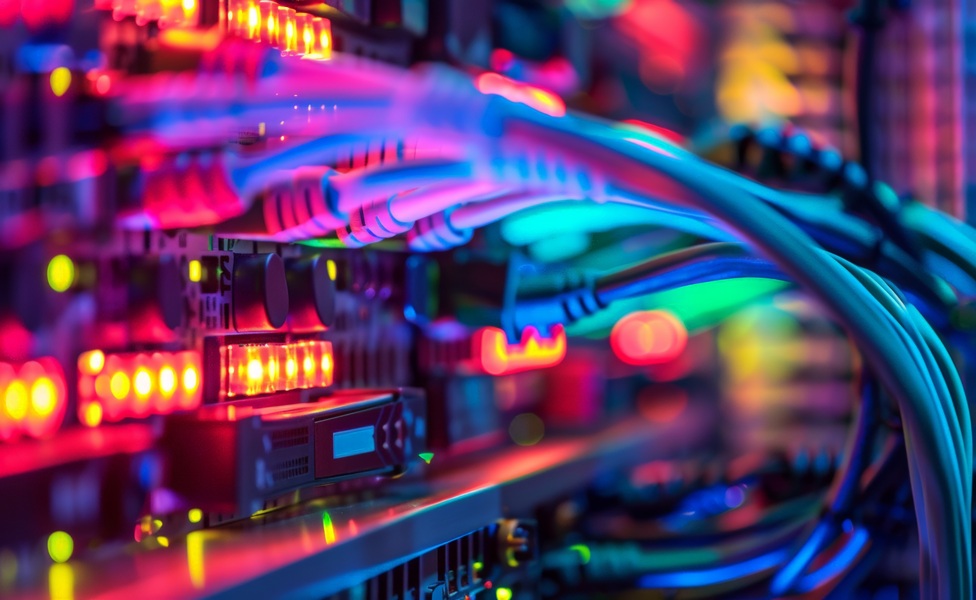
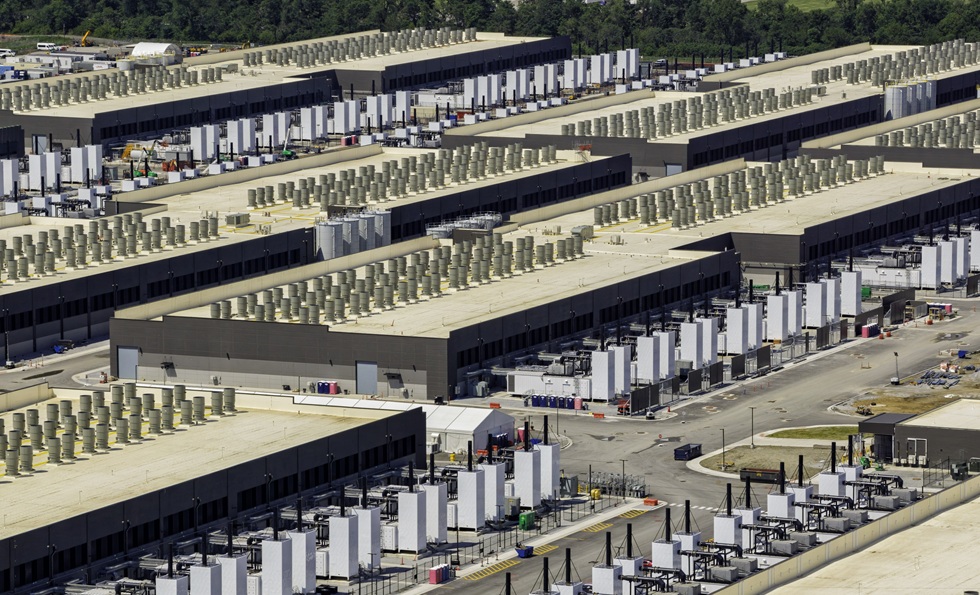
The rapid acceleration of artificial intelligence is transforming the global data centre landscape, driving demand for AI-specific infrastructure at an unprecedented scale. The emergence of AI factories, large-scale data centres dedicated to AI training and inference, represents a fundamental shift in computing power and industrial design. Yet, the complexity of constructing and optimising these facilities presents new engineering challenges.
A single gigawatt AI factory requires extraordinary levels of coordination, with millions of components, thousands of workers, and vast energy and cooling demands. The ability to design, test, and optimise these systems before breaking ground is becoming a necessity rather than an option. The latest approach to this challenge lies in digital twin technology, which is now being leveraged to streamline the development of AI factories and future-proof them against evolving demands.
At NVIDIA GTC, NVIDIA has unveiled the Omniverse Blueprint, a new approach to AI factory design that integrates real-time simulation across disciplines such as power, cooling, and networking. Built on OpenUSD, a framework for aggregating 3D data, the blueprint allows engineers to create digital replicas of AI data centres and run simulations to test efficiency, resilience, and scalability. This shift towards a simulation-first design process could redefine the way industrial-scale computing infrastructure is developed.
Engineering AI factories through real-time simulation
The scale and complexity of AI factories mean that traditional methods of planning and construction are no longer sufficient. Engineers must integrate multiple disciplines, from power distribution to cooling performance, without operating in silos. Digital twin technology enables them to model various configurations, test redundancies, and optimise designs before physical deployment.
Incorporating platforms such as Cadence’s Reality Digital Twin and ETAP’s electrical simulation software, the Omniverse Blueprint provides a shared, interactive environment where different engineering teams can collaborate. This approach allows power engineers to test grid stability, cooling specialists to simulate hybrid air and liquid cooling solutions, and network designers to refine high-bandwidth infrastructure. By iterating in real-time, teams can identify inefficiencies and make informed decisions, reducing risk and shortening project timelines.
The ability to conduct live simulations is a significant departure from traditional static design processes. For example, a minor adjustment to a cooling system layout can be tested immediately, revealing impacts on energy consumption and thermal stability. Previously, such refinements could take weeks of manual calculations and delayed feedback loops.
Building resilience into AI infrastructure
The demands placed on AI factories are not static. As AI applications evolve, so too must the infrastructure that supports them. The Omniverse Blueprint aims to ensure long-term adaptability by allowing operators to simulate failure scenarios, predict future workload demands, and plan for seamless upgrades. This is particularly critical in a sector where downtime can be catastrophic, each day of lost operations at a large-scale AI factory can result in millions of dollars in financial losses.
One of the biggest risks in AI infrastructure is unanticipated failure points caused by fragmented design processes. By integrating power, cooling, and networking into a unified digital twin, engineering teams can proactively test resilience under different stress conditions, such as power spikes, cooling leaks, and grid disruptions. These insights can then inform infrastructure decisions that improve reliability and efficiency at scale.
AI-driven automation for the next phase
The next stage in AI factory evolution goes beyond design and into operational intelligence. Reinforcement learning AI agents are being developed to continuously optimise AI factory performance in real-time. These systems can dynamically adjust power loads, regulate cooling based on changing workloads, and predict maintenance needs before failures occur.
Companies such as Phaidra and Vertech are working with NVIDIA to integrate AI-driven automation into AI factory management. By embedding machine learning into digital twins, operators can create self-regulating AI factories that adapt to fluctuations in demand, environmental conditions, and energy constraints. This shift towards intelligent infrastructure management marks a new phase in data centre evolution, where operational efficiency is no longer limited by static configurations but continuously refined through live AI feedback loops.
Preparing for the AI infrastructure boom
The rise of AI has triggered an arms race in computing power, with over $1 trillion expected to be invested in AI-driven data centres in the coming years. The scale and complexity of these facilities require a departure from conventional engineering methods. Digital twins, real-time simulation, and AI-driven automation are emerging as essential tools for designing, optimising, and managing the next generation of AI infrastructure.
For AI factory operators, the stakes are high. Every inefficiency, every design flaw, and every unexpected failure carries financial and operational consequences. By leveraging digital twin technology, engineering teams can mitigate risks, optimise costs, and ensure their AI factories are prepared for an ever-evolving landscape.
As AI continues to reshape industries, the way we build the infrastructure to support it must evolve in tandem. The integration of simulation-first design, cross-disciplinary collaboration, and AI-powered optimisation will define the success of the AI factories of the future.