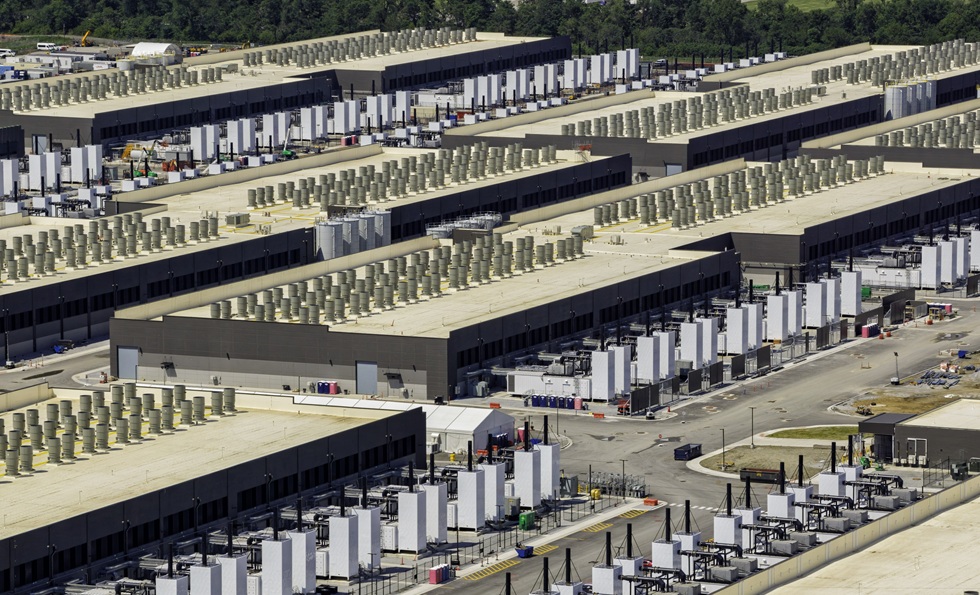
The race to build AI infrastructure is forcing a rethink of one of the least glamorous but most consequential elements of the data centre: cooling.
As operators deploy increasingly dense clusters of GPUs to support artificial intelligence workloads, traditional approaches to thermal management are coming under growing pressure. Against that backdrop, Schneider Electric has introduced a new range of chillers aimed at supporting liquid-cooled AI data centres, reflecting a wider industry shift towards cooling systems designed specifically for high-density computing environments.
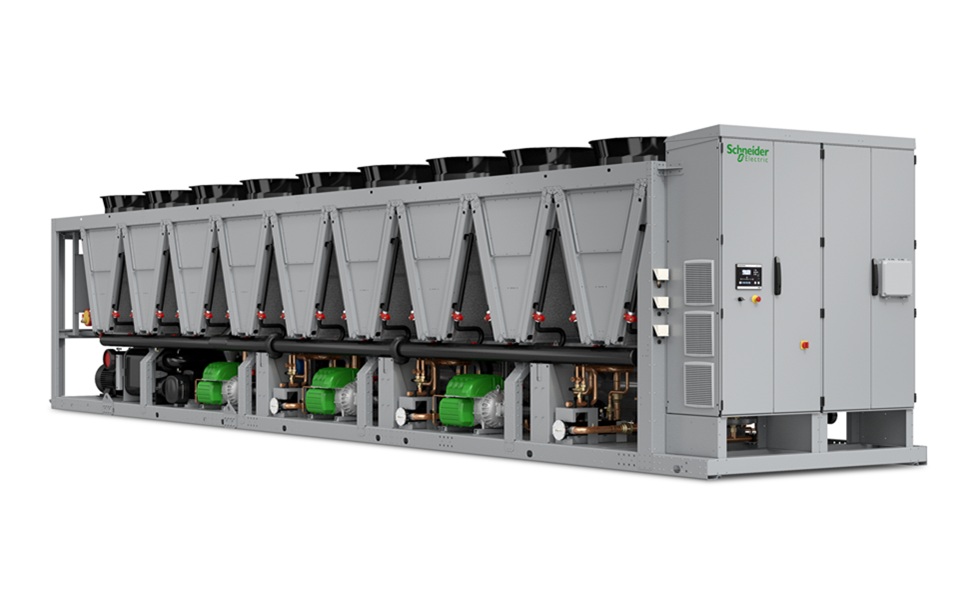
The company’s new Uniflair XCA range comprises six oil-free centrifugal chiller models with cooling capacities ranging from 1,200kW to 2,500kW. Available in both air-cooled and free-cooling configurations, the systems have been developed to support the higher water temperatures increasingly associated with liquid-cooled AI infrastructure.
The announcement underlines how rapidly cooling has moved from an operational consideration to a strategic issue for data centre operators. As AI training and inference workloads drive power densities higher, cooling technology is becoming a critical factor in determining both operational costs and facility scalability.
The infrastructure challenge
Much of the discussion around AI infrastructure has focused on semiconductor performance and the availability of electrical power. Increasingly, however, cooling is emerging as an equally significant constraint.
High-density GPU deployments generate substantial thermal loads that must be managed consistently if systems are to operate reliably. This challenge is accelerating the adoption of liquid cooling architectures, which are widely viewed as more effective than conventional air-based approaches for handling concentrated heat loads.
Schneider Electric’s latest launch is designed around that reality. The Uniflair XCA platform incorporates oil-free centrifugal compressors using magnetic bearing technology alongside variable-speed drives, creating a cooling system intended to maintain efficiency across varying thermal loads and environmental conditions.
The company says the chillers are capable of operating with elevated water temperatures, making them suitable for liquid-cooled AI environments where energy efficiency has become an increasingly important design objective.
Efficiency becomes a strategic priority
Beyond thermal performance, the economics of AI are pushing operators to scrutinise energy consumption across the entire data centre stack. Cooling systems can account for a significant proportion of facility energy use, particularly as computing densities rise. Technologies that reduce reliance on mechanical cooling or improve efficiency therefore have the potential to influence overall operating costs and sustainability objectives.
Schneider Electric has introduced the Uniflair XCA platform, a new range of air-cooled and free-cooling chillers aimed at supporting liquid-cooled AI data centres, reflecting a wider industry shift towards cooling systems designed specifically for high-density computing environments. Schneider Electric says the free-cooling variants of the new platform can operate in temperatures ranging from -20°C to +52°C. In moderate climates, the company states that the systems can achieve energy savings of up to 60% compared with mechanical cooling alone by extending the period during which free cooling can be used.
The chillers also utilise low global warming potential refrigerants and have been designed to align with the requirements of the EU’s F-Gas Regulation 2024/573.
The use of oil-free magnetic bearing compressors is intended to reduce maintenance requirements while eliminating contamination risks associated with lubrication systems. Schneider Electric says the technology can deliver efficiency improvements of up to 25% compared with conventional approaches.
Software takes control
Another notable feature of the launch is the growing role of software in cooling infrastructure. As AI workloads fluctuate and power demands become increasingly dynamic, operators are looking for cooling systems that can respond in real time rather than relying on fixed operating parameters.
The Uniflair XCA platform incorporates firmware-based controls designed to adjust pumps and fans according to operating conditions. These include variable-speed pump algorithms, advanced fan modulation and real-time energy metering capabilities.
Such features highlight a broader trend towards software-defined infrastructure, where cooling systems increasingly operate as intelligent, adaptive platforms rather than static mechanical assets. The objective is to improve efficiency, reduce unnecessary compressor cycling and maintain operational stability as workload demands change.
The launch also reflects the growing emphasis on resilience within AI facilities. Schneider Electric says the system can return to full operational capacity within three minutes following a power outage, a capability aimed at supporting mission-critical applications.
As the AI infrastructure market continues to expand, the importance of cooling technology is likely to grow in parallel. The latest generation of AI systems is reshaping assumptions about power consumption, thermal management and facility design. In that environment, the future performance of AI may depend as much on advances in cooling engineering as on the capabilities of the processors the technology is designed to support.
The first Uniflair XCA units are scheduled to begin shipping globally during June 2026.