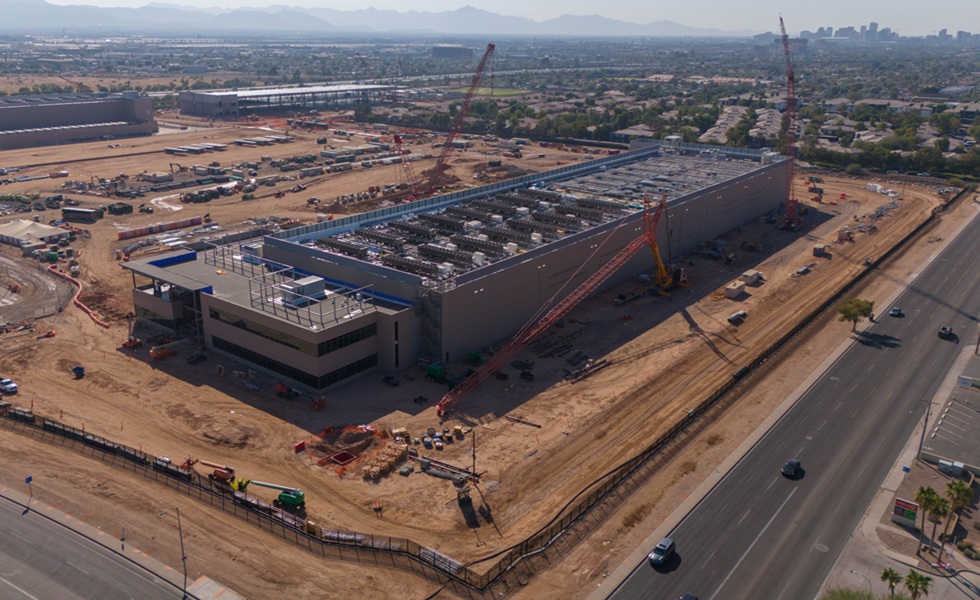
As demand for artificial intelligence (AI) and high-performance computing (HPC) accelerates, the infrastructure that powers them is coming under increased scrutiny. Nowhere is this more evident than in the Nordic region, where atNorth, a fast-scaling data centre operator, is reimagining what responsible digital infrastructure should look like.
The company’s 2024 Sustainability Report outlines a bold strategic shift: moving beyond traditional ESG metrics toward a regenerative model, underpinned by the Future-Fit Framework and the Stockholm Resilience Centre’s planetary boundaries. In doing so, atNorth is positioning itself not only as a provider of compute capacity but as a steward of environmental and social systems under strain from global digitalisation.
Balancing AI demands with planetary limits
Artificial intelligence requires vast amounts of computational power, which in turn drives up energy and resource consumption. In this context, atNorth’s approach reflects a growing realisation in the AI ecosystem: performance gains cannot come at the expense of environmental degradation.
“Our goal is not only to reduce harm, but to actively restore,” said Eyjólfur Magnús Kristinsson, Chief Executive Officer at atNorth. “We are building data centres that support biodiversity, integrate with communities and contribute to local economies.”
The company’s facilities already operate on 100 per cent renewable energy, but this year’s report goes further. atNorth’s 2024 average Power Usage Effectiveness (PUE) was 1.28—well below the industry average of 1.56. It has also reported its Water Usage Effectiveness (WUE) for the first time at under 0.1 L/kWh, again significantly outperforming global norms.
But metrics only tell part of the story. The report introduces atNorth’s “data centre blueprint” for regenerative infrastructure, which includes nature restoration initiatives, onsite renewable integration, and circular construction practices. Its forthcoming DEN02 site in Denmark is a case in point, with plans to convert nearly half of the site into biodiverse green space and to feed excess heat into local homes, greenhouses and food systems.
Accountability in a carbon-intensive industry
While the AI boom fuels innovation across sectors, the infrastructure enabling it can be carbon intensive. Scope 1 and 2 emissions from atNorth’s operations totalled 3,904 metric tons in 2024, while Scope 3 emissions—tracked for the first time—added another 1,300 tons, reflecting the embedded emissions in construction, commuting and business travel.
These figures highlight the growing importance of full lifecycle analysis in data infrastructure. To that end, atNorth is investing in life-cycle assessments for new builds, committing to heat reuse at all operational sites by 2028, and transitioning backup generators to biofuels. Its use of cross-laminated timber in Iceland to replace steel and its repurposing of old buildings in Copenhagen signal a serious intent to reduce construction impact.
The report also acknowledges challenges. Fluorinated gas leaks and the complexities of measuring Scope 3 emissions are openly discussed, with plans to phase out high global warming potential refrigerants and strengthen supplier due diligence.
AI as a driver of climate solutions
Crucially, atNorth recognises that data centres are not just part of the problem—they are also part of the solution. As AI is increasingly deployed to model climate systems, optimise energy use, and improve industrial efficiency, the infrastructure behind these systems must embody the same principles.
“Our strategy is to create data centres that empower AI for good,” said Cora Olsen, Director of Sustainability. “That means aligning digital growth with environmental restoration and social progress.”
This alignment is not abstract. Strategic partnerships with circular economy start-ups such as WA3RM and Hringvarmi are already repurposing waste heat from atNorth’s Icelandic sites to grow microgreens and reduce food imports. This is AI infrastructure intersecting directly with food systems, urban planning, and community well-being.
A glimpse into the future of digital infrastructure
If AI is to reach its full potential as a force for good, it will require data infrastructure that is transparent, efficient, and regenerative. The 2024 atNorth Sustainability Report offers a glimpse of what that could look like: data centres that capture and redistribute heat, restore ecosystems, and embed circular design principles into their physical footprint.
Whether this model can scale across an industry still dominated by legacy practices remains to be seen. But in setting its strategy against planetary boundaries and social foundations, atNorth has provided a framework that others may follow—and perhaps must.
As the data economy expands, the questions it raises are no longer just technical or financial. They are environmental, social and, ultimately, existential.