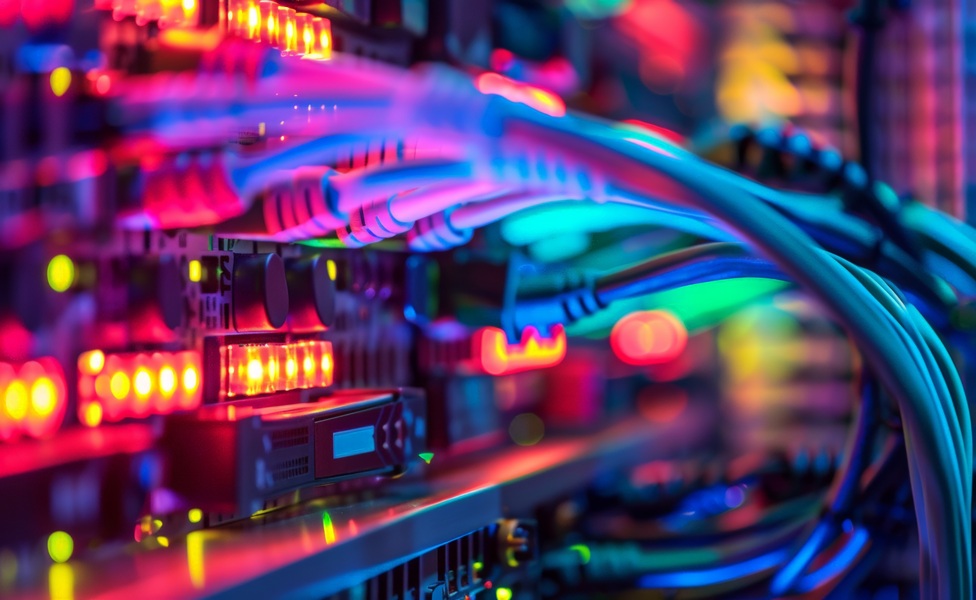
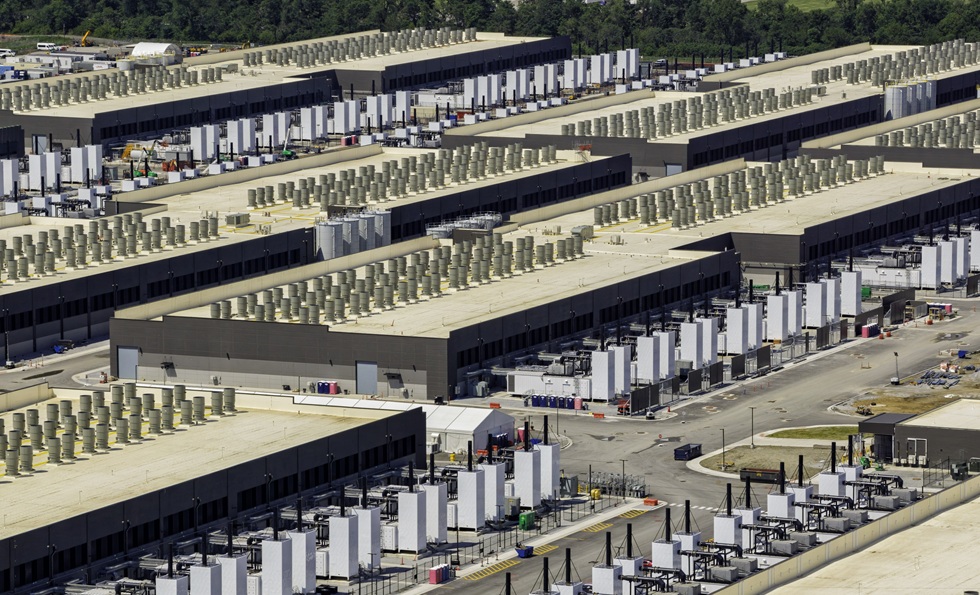
As artificial intelligence pushes data centres to unprecedented scale, the most critical components are no longer only chips and servers, but the physical networks that bind them together. A new multi-year agreement between Meta and Corning highlights how fibre-optic infrastructure is becoming a strategic foundation for the next phase of AI development in the United States.
Meta has announced an agreement of up to $6 billion with Corning to supply fibre-optic cables for its expanding US data-centre footprint. The partnership is intended to support the connectivity demands of Meta’s AI infrastructure while enabling Corning to expand domestic manufacturing, particularly in North Carolina. At a time when AI systems increasingly depend on real-time data movement at massive scale, the deal reflects how physical connectivity is now inseparable from AI capability.
Data centres underpinning AI workloads must move information between servers, accelerators and storage with minimal latency. Fibre-optic cabling has therefore become as critical as compute itself, enabling near real-time transfer across increasingly dense facilities. For Meta, whose platforms span consumer applications, enterprise services and AI-enabled wearables, the resilience and performance of that connectivity is directly linked to product capability.
AI infrastructure reshapes supply chain priorities
Joel Kaplan, Meta’s chief global affairs officer, framed the partnership in terms of both performance and domestic capacity. He said that building advanced data centres in the US requires world-class partners and American manufacturing, positioning fibre supply as part of the country’s ability to compete in the global AI race.
The agreement will allow Corning to expand manufacturing across its operations, including a significant capacity increase at its Trivium Corporate Center in Catawba County, North Carolina. Corning said the investment is expected to raise its employment levels in the state by 15 to 20 per cent, supporting a workforce of more than 5,000 people across its optical fibre and cable manufacturing facilities.
For Corning, the partnership reinforces a long-term strategy focused on domestic production of technologies that support next-generation data centres. Wendell P. Weeks, chairman and chief executive of Corning, said the agreement reflects the company’s commitment to developing and manufacturing critical connectivity technologies in the US, strengthening domestic supply chains while sustaining a highly skilled workforce of scientists, engineers and production teams.
Data centres become engines of employment
Meta’s data-centre programme has already had a significant employment footprint in the US. The company said 26 facilities are currently under construction or operational nationwide, supporting around 30,000 skilled trade jobs during construction and roughly 5,000 operational roles once facilities are live. These roles span electricians, HVAC specialists, network technicians, safety and security professionals and engineers responsible for running high-availability infrastructure.
The fibre partnership sits within that broader context. As AI workloads scale, data centres are becoming more complex to build and operate, increasing demand for specialised skills across construction, manufacturing and operations. The ability to source critical components such as fibre domestically reduces supply-chain risk while anchoring economic activity locally.
Fibre as the connective tissue of AI
The announcement underscores a broader shift in how AI infrastructure is viewed. While attention often focuses on GPUs and advanced processors, the performance of AI systems increasingly depends on how efficiently data can be moved between those components. As generative AI and other data-intensive applications expand across healthcare, finance, agriculture and consumer technology, demand for high-capacity fibre connectivity continues to rise.
Meta positions the agreement as part of a strategy to ensure that its AI ambitions are supported by reliable, high-performance infrastructure built in the US. By aligning its data-centre expansion with domestic manufacturing partners, the company is tying AI growth to industrial capacity rather than relying solely on global supply chains.
In practical terms, the partnership signals that fibre-optic manufacturing is no longer a background consideration. It is becoming a strategic enabler of AI at scale, influencing where data centres are built, how quickly they can be deployed and how resilient they are over time.
As AI moves deeper into the economy, the race is no longer only about who designs the most capable models. It is also about who can build and connect the physical systems that allow those models to operate in real time. In that race, fibre has quietly become one of the most valuable assets of all.