The next phase of artificial intelligence is not being shaped solely by models or algorithms, but by the physical limits of the infrastructure that supports them. As AI systems grow larger, denser and more power hungry, the ability to design, manufacture and deploy entire data centre platforms at speed is becoming a competitive differentiator in its own right.
That reality sits behind a new announcement from Supermicro, which has outlined expanded manufacturing capacity and liquid cooling capabilities to support upcoming platforms from NVIDIA. The move is aimed at enabling rapid deployment of rack-scale systems built around NVIDIA’s forthcoming Vera Rubin and Rubin architectures, systems designed to operate at unprecedented density and performance.
The announcement highlights a shift underway across the AI ecosystem. As next-generation accelerators push into exascale performance territory, the constraints are no longer limited to silicon supply. Power delivery, cooling, system integration and time to deployment are increasingly shaping how quickly organisations can translate AI ambition into operational capacity.
From components to data centre scale systems
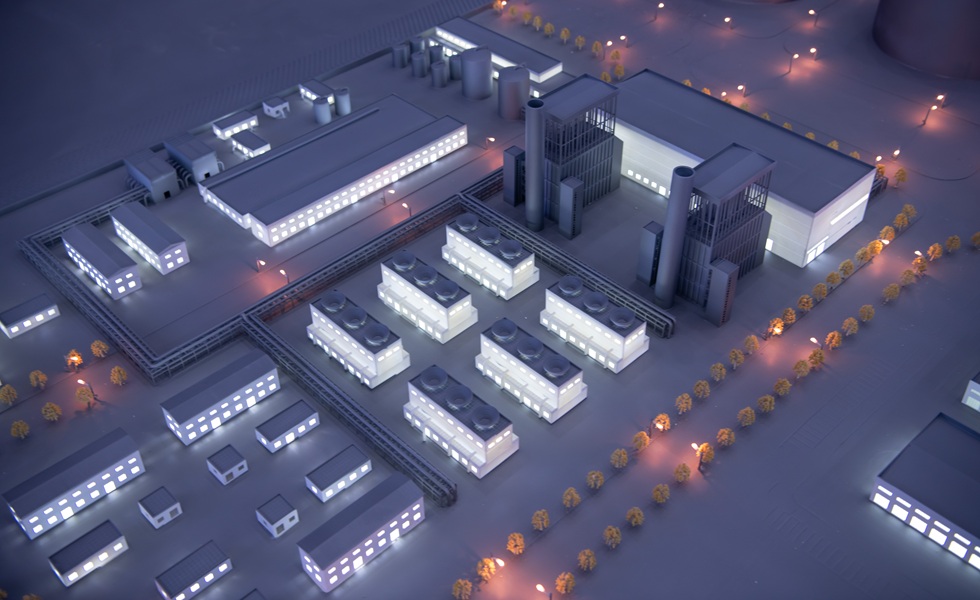
Supermicro’s strategy centres on what it calls Data Centre Building Block Solutions, a modular approach that treats the data centre as an integrated system rather than a collection of individual servers. By combining standardised building blocks with extensive customisation, the company argues it can shorten production cycles and accelerate deployment of complex AI infrastructure.
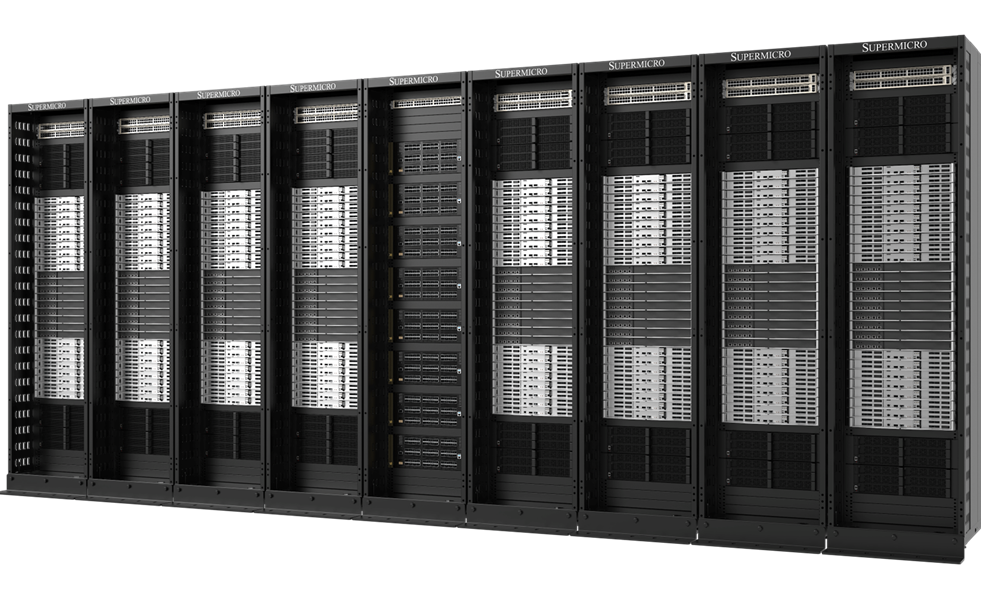
This approach is particularly relevant for platforms such as the NVIDIA Vera Rubin NVL72 SuperCluster. The system brings together 72 NVIDIA Rubin GPUs and 36 NVIDIA Vera CPUs in a single rack-scale configuration, supported by high-speed interconnects and networking designed for large-scale training and inference. The performance figures are striking, with the platform delivering exaflops-class compute, massive memory bandwidth and tens of terabytes of fast memory.
However, the technical specifications tell only part of the story. Systems of this density cannot be deployed using traditional air-cooled designs without severe compromises. Supermicro’s implementation incorporates an enhanced data centre-scale liquid cooling stack, including in-row coolant distribution units, enabling warm-water cooling designed to reduce energy consumption and water usage while maintaining high density.
Alongside the flagship rack-scale system, Supermicro is also preparing liquid-cooled 2U HGX Rubin NVL8 platforms. These eight-GPU systems are targeted at enterprises and high-performance computing environments, offering a more compact form factor while still delivering extremely high throughput. The flexibility to pair these systems with next-generation x86 processors from Intel or AMD reflects the growing need to support diverse compute architectures within AI estates.
Liquid cooling moves to the centre of AI deployment
The emphasis on liquid cooling is not incidental. As AI accelerators push power densities far beyond previous generations, liquid cooling is becoming a baseline requirement rather than an advanced option. Supermicro’s investments span direct liquid cooling technologies, rack-scale designs and manufacturing processes optimised specifically for liquid-cooled systems.
The NVIDIA Vera Rubin platform itself has been designed with this reality in mind. Features such as high-speed GPU-to-GPU and CPU-to-GPU interconnects, advanced transformer engines for long-context workloads and enhanced reliability and serviceability all assume environments where heat can be removed efficiently and predictably. Without that capability, the theoretical performance of the hardware cannot be realised in practice.
The networking layer reinforces this point. Newly announced Spectrum-X Ethernet Photonics platforms are designed to deliver higher power efficiency and reliability at extreme scale, reducing the operational overheads associated with traditional optical interconnects. Storage systems based on Supermicro hardware and NVIDIA BlueField DPUs are positioned to support the data movement and management demands of large AI clusters.
Manufacturing speed becomes a strategic asset
Beyond individual technologies, the announcement underscores the growing importance of manufacturing capacity as a strategic asset in the AI race. Supermicro says its expanded US-based design and manufacturing footprint is intended to support accelerated fulfilment of fully liquid-cooled systems, enabling customers to move from specification to deployment more quickly.
For hyperscalers and enterprises alike, time to online is increasingly critical. AI workloads are expensive to run and competitive advantage can hinge on who brings capacity online first. Modular architectures, pre-validation and integrated cooling stacks are all part of an effort to compress deployment timelines while managing risk.
Charles Liang, president and chief executive of Supermicro, framed the company’s position in terms of speed and readiness, arguing that close collaboration with NVIDIA and an agile building block approach allow advanced AI platforms to reach the market faster. Stripped of marketing language, the implication is clear. In the next phase of AI infrastructure, success will depend as much on execution and integration as on access to cutting-edge silicon.
As NVIDIA’s Vera Rubin and Rubin platforms move closer to deployment, the industry is entering a period where infrastructure design, manufacturing scale and thermal management will determine how widely and how quickly these systems can be adopted. The AI race is no longer confined to research labs or chip fabs. It is being fought on the factory floor and in the data centre itself.