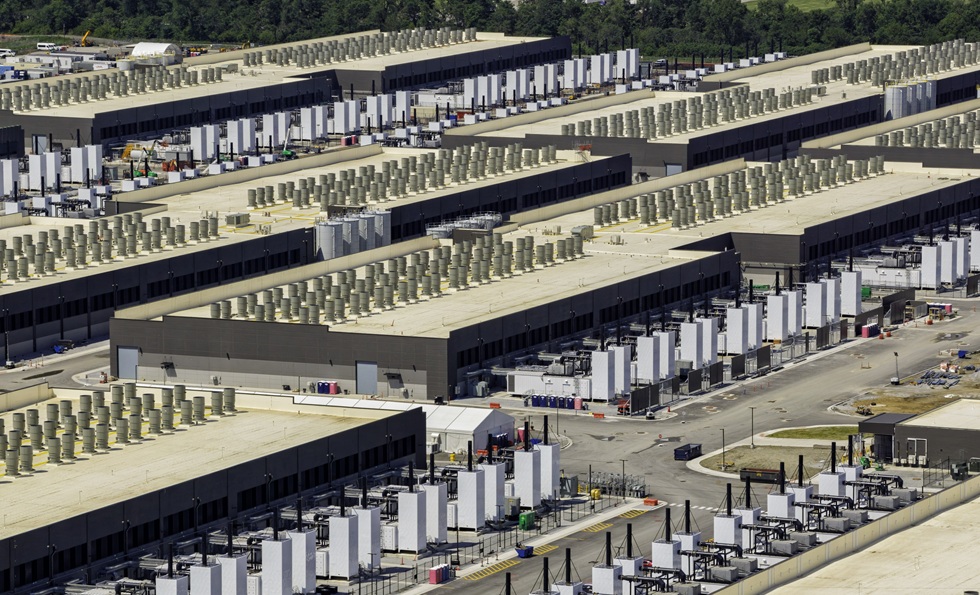
The artificial intelligence boom is creating a new class of infrastructure company as investors, technology providers and energy suppliers seek to address one of the industry’s most persistent challenges: how to build digital infrastructure at the speed demanded by hyperscale AI.
KKR has launched Helix Digital Infrastructure, a new company backed by more than $10 billion in long-duration capital commitments from founding investors including KKR, the Kuwait Investment Authority, NVIDIA and Vistra. The venture has been established to finance, develop and manage the data centres, power generation, transmission and connectivity infrastructure required to support growing AI demand.
The launch reflects a broader shift taking place across the AI economy. While much of the attention surrounding artificial intelligence has focused on models, chips and applications, an equally significant challenge has emerged in the physical infrastructure needed to support them. Data centres require access to land, electricity, connectivity and increasingly complex cooling and energy systems, all of which must be delivered simultaneously if AI capacity is to come online at scale.
The next infrastructure bottleneck
Industry discussion around AI infrastructure has increasingly centred on the sheer scale of investment required over the coming decade. KKR described AI as driving one of the largest infrastructure buildouts in modern history, requiring trillions of dollars of investment across data centres, power generation, transmission and connectivity networks.
The challenge is no longer simply one of financing individual assets. Hyperscale operators must coordinate multiple infrastructure projects across different sectors and geographies while managing growing demand for AI services.
Helix has been created around the idea that infrastructure delivery itself has become a constraint on AI expansion. Rather than treating power, data centres and connectivity as separate projects, the company aims to provide a single point of coordination across these elements.
The model reflects a growing recognition that access to capital alone may not be sufficient to accelerate AI deployment. Execution, project delivery and long-term infrastructure planning are becoming equally important competitive factors.
Power moves to the centre of AI strategy
Among the most significant aspects of the announcement is the role of energy infrastructure.
As AI systems become larger and more power intensive, electricity availability is increasingly emerging as a determining factor in where new data centre capacity can be built. The involvement of Vistra as Helix’s preferred power provider highlights the growing convergence of the technology and energy sectors.
Vistra operates power generation assets across 18 US states and Washington DC and has executed more than 5,000 megawatts of power purchase agreements with hyperscale operators. Under the Helix model, the company will provide both existing generation capacity and expertise in power development and grid infrastructure.
The arrangement reflects a wider trend across the AI sector, where access to reliable electricity is becoming as important as access to computing hardware. In many regions, power availability and grid interconnection timelines have become critical considerations for new AI deployments.
A new approach to AI infrastructure
Helix will be led by Adam Selipsky, former chief executive of Amazon Web Services, alongside a management team focused on cloud infrastructure, digital infrastructure and energy systems.
NVIDIA will act as a strategic technology partner, supporting deployment of infrastructure aligned with its AI factory architecture. The company said the partnership is intended to support efficiency, lower operational costs and accelerate deployment timelines.
The launch also highlights the increasingly prominent role of institutional investors in shaping AI infrastructure development. Sovereign wealth funds, infrastructure specialists and pension-backed capital are becoming central to financing projects that require long-term investment horizons and substantial upfront expenditure.
As AI adoption accelerates across industries, the focus of the market is gradually shifting from individual technology announcements towards the practical realities of delivering the infrastructure that underpins them. The creation of Helix suggests that the next phase of the AI economy may be defined not only by advances in software and semiconductors, but by the ability to coordinate the power systems, data centres and networks on which those technologies depend.
Helix is launching with access to more than $10 billion in committed capital and is open to additional eligible institutional investors following the completion of its founding commitments.