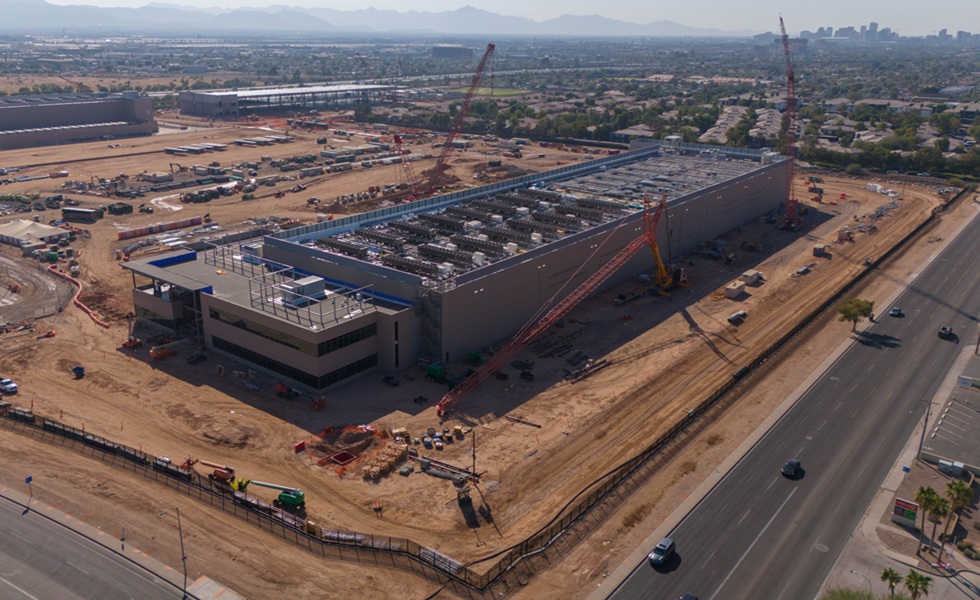
The accelerating demand for AI compute has prompted CoreWeave to take decisive control of its infrastructure backbone through a $9 billion all-stock acquisition of Core Scientific. The transaction consolidates one of the fastest-growing AI hyperscalers with one of the largest data centre operators in the United States, signalling a strategic shift from dependency to ownership in a market increasingly defined by scale, efficiency and power availability.
The deal gives CoreWeave ownership of 1.3 GW of gross power capacity across Core Scientific’s national data centre footprint, with a further 1 GW of potential expansion. It effectively folds a key supplier into CoreWeave’s operation, collapsing a critical layer of vertical reliance at a time when data centre demand and power constraints are driving up capital expenditure and operational risk.
CoreWeave CEO Michael Intrator described the deal as a means of future-proofing growth. “Verticalising the ownership of Core Scientific’s high-performance data centre infrastructure enables CoreWeave to significantly enhance operating efficiency and de-risk our future expansion,” he said. “Owning this foundational layer of our platform will enhance our performance and expertise as we continue helping customers unleash AI’s full potential.”
From leaseholder to owner
The acquisition marks a structural evolution in how hyperscale AI compute providers are navigating the limits of leased infrastructure. Previously reliant on Core Scientific’s capacity, CoreWeave can now eliminate lease overheads, generate an estimated $500 million in annual cost savings, and strengthen its balance sheet by gaining access to hard infrastructure assets that can serve as collateral.
With AI model training becoming more power-intensive and latency-sensitive, ownership of physical infrastructure is increasingly viewed as a competitive necessity rather than a financial burden. CoreWeave is also seeking to lower its capital costs, which currently hover around ten per cent for short-term obligations. Executives have suggested the merger could trim several percentage points from future borrowing rates.
The logic is clear: controlling power and real estate improves pricing stability, reduces exposure to supply-side volatility, and increases negotiating leverage with cloud customers and hardware partners. The merger also brings Core Scientific’s development and operational expertise in-house, complementing CoreWeave’s specialisation in AI workload orchestration and GPU provisioning.
Core Scientific CEO Adam Sullivan emphasised the complementary strengths of the two businesses. “Together with CoreWeave, we will be well-positioned to accelerate the availability of world-class infrastructure for companies innovating with AI,” he said. “This combination delivers value for our shareholders, who will be able to participate in the upside potential of the combined company.”
A signal amid the noise
Despite the industrial logic of the merger, market reaction was subdued. CoreWeave shares dipped two per cent following the announcement, while Core Scientific stock fell by 16 per cent, a retreat that likely reflects broader caution around valuation expectations after months of AI exuberance. Investors may also be weighing the risk of macroeconomic disruption before the deal closes in Q4 2025, particularly as restrictions on CoreWeave insider share sales are set to expire before then.
The transaction highlights a growing tension in the AI infrastructure market: the need to scale quickly, efficiently and resiliently without being overexposed to hype cycles or narrow customer bases. CoreWeave, despite its rapid ascent since its March IPO, remains reliant on a handful of key partners and faces stiff competition from hyperscale incumbents like Amazon and Google.
Yet the deal underscores a broader truth: for AI companies operating at the bleeding edge of compute, power and latency, infrastructure is no longer a service, it is strategy. By acquiring its supplier, CoreWeave is making a long-term bet that control, not contracts, will define who leads in the next phase of the AI economy.