Artificial intelligence is forcing a fundamental rethinking of the most basic building blocks of computing infrastructure, as demand for continuous, large-scale workloads begins to outstrip the capabilities of traditional processors. A new collaboration between Meta and Arm signals a shift in how data centre silicon is being designed for an era increasingly defined by agentic AI and sustained inference at scale.
The two companies have announced a partnership to co-develop multiple generations of CPUs tailored specifically for AI workloads, beginning with the Arm AGI CPU. The move represents Arm’s first step into producing its own data centre silicon, extending its long-standing role beyond licensing intellectual property and compute subsystems into full production processors.
The development reflects a broader structural change in artificial intelligence. As AI systems evolve from periodic model training towards continuously operating agents that reason, plan and act, the demands placed on infrastructure are changing. Processing requirements are no longer confined to bursts of training activity but are becoming persistent, creating sustained pressure on compute, memory and power.
Agentic workloads reshape compute demand
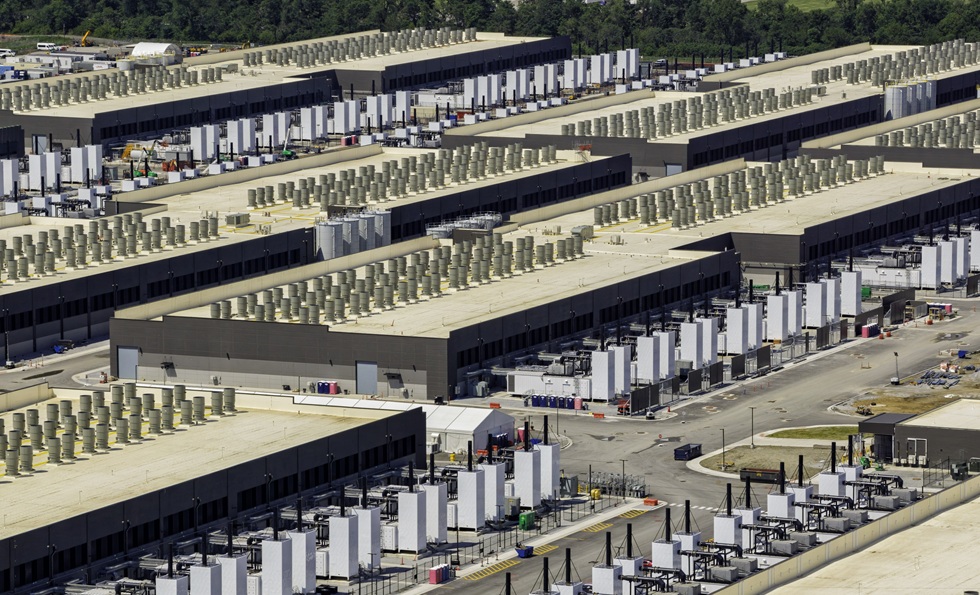
According to the companies, the rise of agentic AI is driving a significant increase in the volume of tokens processed across systems, requiring greater CPU capacity to manage reasoning, coordination and data movement. Data centres supporting these workloads are expected to require more than four times the current CPU capacity per gigawatt of infrastructure, intensifying the need for more efficient and scalable processing architectures.
The Arm AGI CPU has been designed to address these pressures. It delivers up to 136 Arm Neoverse V3 cores per processor, with high memory bandwidth and low latency, while supporting dense configurations ranging from air-cooled systems with thousands of cores per rack to liquid-cooled deployments reaching tens of thousands of cores. The architecture is also intended to operate within constrained power envelopes, a critical consideration as AI infrastructure expands.
For Meta, the collaboration forms part of a broader strategy to develop a custom silicon portfolio capable of supporting its growing AI ambitions. The company plans to deploy the new CPU alongside its own Meta Training and Inference Accelerator, integrating general-purpose and specialised compute to improve performance density within data centres.
The partnership also includes a commitment to release board and rack designs through the Open Compute Project, extending the reach of the architecture beyond a single organisation and into the wider AI ecosystem.
Infrastructure efficiency becomes strategic
The announcement underscores a shift in how AI performance is being measured. While advances in model capability remain important, the ability to run those models efficiently at scale is becoming equally decisive. The Arm AGI CPU is positioned as delivering more than double the performance per rack compared with traditional x86 processors, alongside improvements in energy efficiency and workload density.
These gains have direct implications for the economics of AI infrastructure. Increased performance within existing power and space constraints allows operators to extract more usable compute from each data centre, reducing capital expenditure associated with large-scale deployments. Arm has indicated that such efficiencies could translate into substantial savings when applied across gigawatt-scale facilities.
The move into silicon production also reflects growing demand from across the ecosystem for more integrated solutions. Arm confirmed support from a range of partners, including AWS, Google and NVIDIA, highlighting the extent to which AI infrastructure is becoming a coordinated effort across hardware, software and manufacturing.
For Arm, the transition marks a defining moment. After decades of enabling partners to build on its architecture, the company is now positioning itself as a direct provider of silicon for data centre environments shaped by artificial intelligence.
For Meta, it reflects a recognition that delivering AI experiences at global scale requires control over the underlying hardware stack as much as the models that run on it.
As artificial intelligence continues to move into continuous operation across industries, the focus of innovation is expanding beyond algorithms. The design of processors, the efficiency of data centres and the coordination of entire compute ecosystems are becoming central to how AI is deployed in practice. The partnership suggests that the next phase of AI competition may be determined not only by who builds the most capable models, but by who can engineer the infrastructure required to run them continuously, efficiently and at global scale.