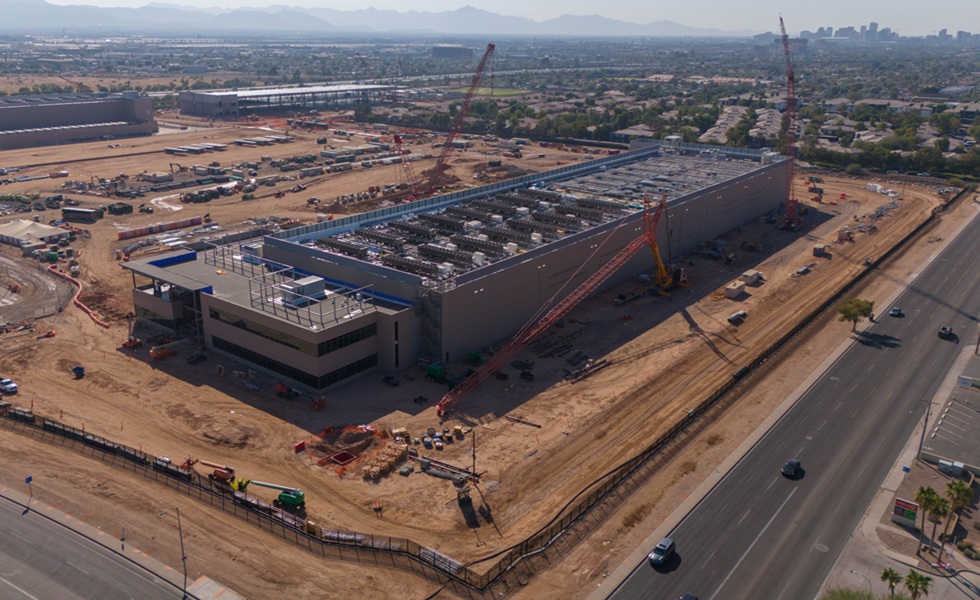
Nebius is planning a 310 MW AI facility in Lappeenranta, Finland, a development that reflects the growing scale and industrialisation of artificial intelligence infrastructure across Europe.
The proposed site, described as an AI factory, will be one of the largest dedicated deployments of AI compute in the region when fully operational. Initial capacity is expected to come online in 2027, forming part of a broader expansion strategy that targets more than three gigawatts of contracted power by the end of 2026.
The project follows the recent expansion of Nebius’s existing Finnish data centre in Mäntsälä to 75 megawatts, and sits alongside additional developments, including a 240 megawatt facility near Lille in France and a planned gigawatt-scale site in the United States. Taken together, these investments point to a shift in how AI infrastructure is being conceived, from distributed data centres towards concentrated, high-capacity industrial systems.
scale becomes the defining factor
The Lappeenranta campus will occupy around 100 acres and consist of multiple buildings designed specifically for AI training and inference workloads. It is expected to create up to 700 construction jobs during development, with around 100 permanent roles once operational, alongside indirect employment in operations and maintenance.
Such projects underline the extent to which AI infrastructure is becoming a matter of scale. As demand for high-performance compute continues to rise, driven by increasingly complex models and continuous inference requirements, the capacity of traditional data centre architectures is being stretched. The response has been to build larger, more specialised facilities capable of delivering sustained performance at industrial levels.
Nebius said its AI factories will support platforms including NVIDIA Blackwell and NVIDIA Vera Rubin systems, with its Mäntsälä site already hosting an operational deployment of the NVIDIA GB300 NVL72 platform. These systems are designed to handle the intensive workloads associated with frontier AI models, further reinforcing the link between hardware innovation and infrastructure expansion.
energy and efficiency pressures
The scale of these facilities brings with it significant energy considerations. Nebius said the Lappeenranta site will draw on a predominantly low-carbon energy mix, reflecting increasing pressure on operators to align AI infrastructure with environmental and regulatory expectations.
Cooling is a central part of that equation. The facility will use a closed-loop liquid cooling system, minimising reliance on local water supplies, and will be designed to integrate heat recovery into the local district heating network. At the company’s Mäntsälä site, a similar approach avoided approximately 4,000 tonnes of carbon dioxide equivalent emissions in 2025 and reduced heating costs for connected households by around 10 per cent.
These design choices highlight a broader shift in how data centres are being integrated into local energy systems. Rather than operating as isolated facilities, they are increasingly being positioned as part of regional infrastructure, with potential roles in energy efficiency and heat reuse.
The Lappeenranta development also points to the growing importance of location. Finland’s combination of energy availability, climate conditions and technical expertise is attracting continued investment, with local institutions expected to play a role in developing the skills required to support AI infrastructure.
Nebius said it is exploring partnerships with academic organisations through its Nebius Academy to build a pipeline of talent in AI and related fields, reflecting a wider recognition that workforce capability is becoming as critical as physical infrastructure.
The emergence of AI factories on this scale signals a deeper transformation. Artificial intelligence is no longer an abstract layer of software running on shared resources. It is becoming an industrial system in its own right, defined by power capacity, hardware architecture and integration with local economies.
As Europe expands its footprint in this area, the challenge will be to balance the demands of scale with the constraints of energy, sustainability and regional development. The next phase of AI growth may depend as much on where these systems are built as on how they are designed.