Siemens has introduced an updated version of its Industrial Automation DataCenter, signalling a shift in how artificial intelligence is being deployed within manufacturing environments, moving from centralised systems into real-time operations at the edge.
Presented at Hannover Messe 2026, the platform has been redesigned as an AI-ready infrastructure, integrating accelerated computing from NVIDIA and cybersecurity technologies from Palo Alto Networks. The system is delivered as a pre-configured and fully tested solution, aimed at reducing the complexity of deploying AI within industrial settings.
The development reflects a broader transition in AI adoption. Rather than relying on centralised cloud systems, manufacturers are increasingly seeking to run AI applications directly within production environments, where data is generated and decisions must be made in real time.
Edge computing becomes operational necessity
The Industrial Automation DataCenter is designed to host and execute production-critical AI applications locally, using NVIDIA accelerated computing. This enables use cases such as image-based quality control, predictive maintenance and process optimisation to be performed directly on-site, without reliance on external infrastructure.
The system also incorporates NVIDIA BlueField data processing units, which handle data processing and security functions at the infrastructure level. By offloading these tasks from core systems, the architecture is intended to maintain performance while enabling continuous monitoring and protection.
This approach highlights a growing recognition that latency and reliability are critical factors in industrial AI deployment. In environments where production processes operate continuously, delays introduced by transferring data to and from centralised systems can limit the effectiveness of AI applications.
By moving compute closer to the point of operation, edge-based systems aim to address these constraints, allowing organisations to act on data as it is generated.
Security and integration challenges intensify
The integration of AI into industrial environments introduces additional complexity, particularly in relation to cybersecurity. Increased connectivity between systems can expose production environments to new risks, requiring more sophisticated approaches to protection.
To address this, Siemens has integrated Palo Alto Networks’ Prisma AIRS technology into the platform, alongside the capabilities of NVIDIA BlueField. Together, these systems are designed to provide real-time analysis of network activity, enabling continuous monitoring without disrupting operational processes.
A key feature of the architecture is the ability to analyse data streams without interfering with them, preserving system performance while maintaining visibility. This reflects the need to balance security with the deterministic requirements of industrial systems, where even minor disruptions can have significant consequences.
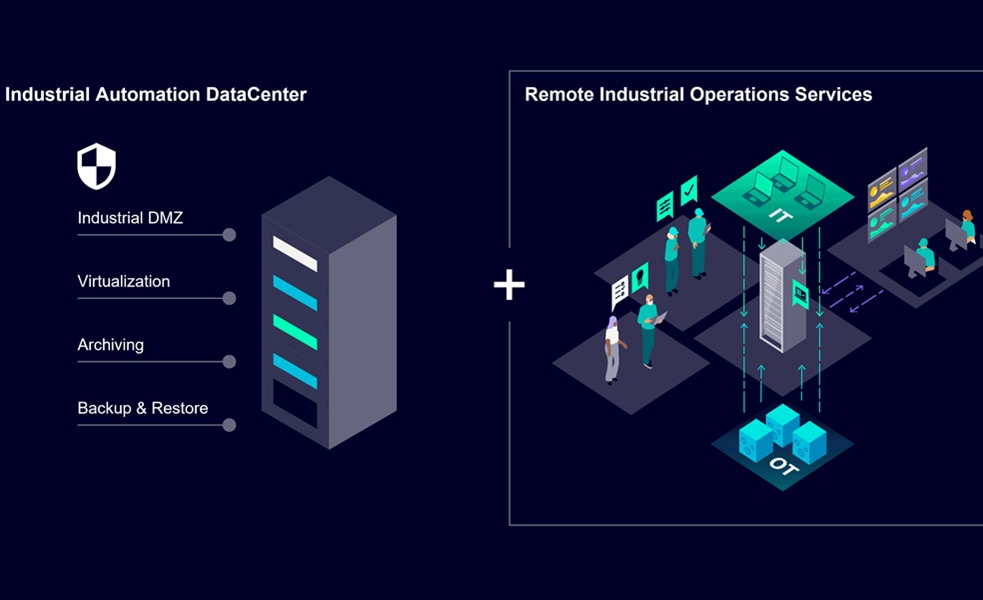
The platform also incorporates an industrial demilitarised zone to separate IT and operational technology networks, reinforcing the importance of segmentation as AI systems become more deeply embedded in production environments.
Beyond the technical architecture, the system is positioned as a response to the challenges of deploying AI at scale in industry. Building and integrating high-performance, secure environments can be time-consuming and complex, with Siemens noting that installation and engineering alone can require up to 80 hours. By delivering a pre-integrated solution, the company aims to reduce these barriers and accelerate adoption.
The implications extend beyond individual deployments. As AI becomes a core component of industrial operations, the infrastructure required to support it is evolving into a standardised layer, combining compute, networking and security into unified systems.
This shift suggests that the future of industrial AI will be shaped as much by infrastructure design as by the applications themselves. The ability to deploy AI safely, reliably and at scale within production environments will determine how quickly organisations can move from experimentation to operational use.
As manufacturers seek to integrate AI into their processes, the focus is moving towards systems that can deliver real-time intelligence without compromising stability. The emergence of edge-based, pre-configured platforms reflects that demand, pointing to a future in which artificial intelligence is embedded directly into the fabric of industrial operations.