The infrastructure required to run artificial intelligence is becoming more complicated as AI systems move beyond generating responses towards executing tasks. While graphics processing units have dominated investment in AI computing, the growing use of autonomous agents is creating a different requirement: substantial processing capacity to manage the work taking place around those GPUs.
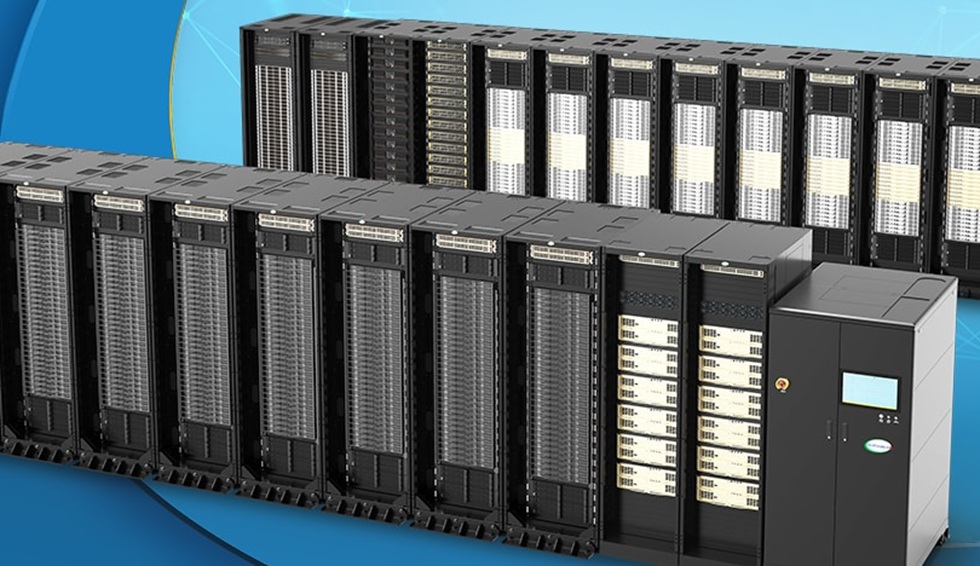
Supermicro’s introduction of a liquid-cooled NVIDIA Vera CPU rack reflects this shift. Designed to operate independently or alongside NVIDIA’s Vera Rubin NVL72 platform, the system provides dedicated computing capacity for the execution, coordination and monitoring of agentic AI workloads.
The distinction is important because agentic systems operate differently from conventional generative AI. Rather than processing a prompt and producing a response, agents can execute tools, evaluate results and repeat operations across multiple stages. These activities require CPU resources even when GPUs remain responsible for generating tokens, code and queries.
As the number of concurrent agents increases, the supporting CPU infrastructure can become a significant consideration in AI factory design.
Supermicro’s new rack incorporates 256 NVIDIA Vera CPUs, providing 22,528 cores and 45,056 threads. The company says the system can support up to 22,500 concurrent agent sandboxes, the isolated execution environments in which agents perform tasks.
The rack is fully liquid-cooled using Supermicro’s DLC-2 technology and shares a common infrastructure architecture with Vera Rubin NVL72 through NVIDIA’s third-generation MGX design. This is intended to simplify deployments combining GPU-intensive computing with the CPU capacity needed for agent execution.
Power distribution is another area where the architecture reflects changing data centre requirements. Operators can choose conventional AC supplies or an 800V DC sidecar power rack incorporating battery backup units instead of a traditional uninterruptible power supply. Supermicro says this configuration can reduce floor-space requirements and improve power conversion efficiency.
Security is also becoming more closely integrated with computing infrastructure as AI agents gain the ability to execute actions independently.
The system supports NVIDIA’s OpenShell architecture, which applies policy-based controls to agents during operation. NVIDIA Sentry, running on BlueField-4 data processing units, provides separate monitoring and can quarantine agents that operate outside permitted boundaries.
This approach illustrates how the infrastructure supporting AI is expanding beyond processing performance to include runtime governance and security enforcement.
Supermicro also offers a deployment architecture combining Vera CPU racks with Vera Rubin NVL72 systems, including Spectrum-X Ethernet networking and redundant cooling infrastructure. Alternatively, the CPU racks can support standalone workloads such as database processing, cluster management and software development.
For data centre operators, the development raises questions about future infrastructure planning. AI capacity can no longer be measured solely by the number or performance of installed GPUs. As agentic workloads become more complex, the balance between GPU computing, CPU execution, networking and security will increasingly influence how AI factories are configured.
The challenge is shifting from building infrastructure capable of generating intelligence to supporting the much broader computing environment required to put that intelligence to work.