Vertiv has introduced a new wall-mounted cooling system for small IT environments across Europe, the Middle East and Africa, reflecting a broader shift in how artificial intelligence and distributed computing are reshaping the physical demands of digital infrastructure.
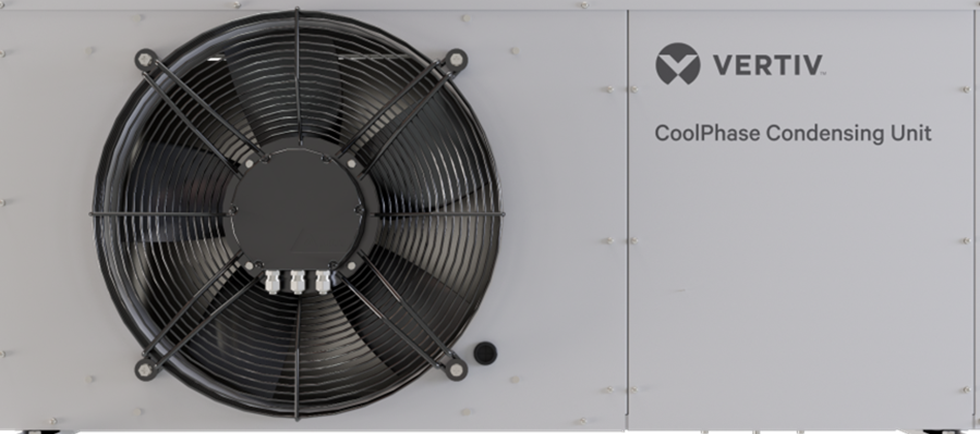
The system, Vertiv CoolPhase Wall, is designed for edge deployments and compact data rooms where traditional cooling approaches have struggled to keep pace with the thermal intensity of modern workloads. As AI applications extend beyond centralised data centres into more distributed environments, the challenge of maintaining reliable performance in constrained spaces is becoming increasingly acute.
While much of the discussion around AI has focused on models and software, the expansion of compute into non-traditional environments is exposing a more fundamental constraint. Systems originally designed for general IT or even human comfort are being asked to support continuous, high-density processing, often without the infrastructure typically associated with large-scale facilities.
Cooling moves closer to the edge
The introduction of a wall-mounted system reflects the changing geography of computing. As organisations deploy AI capabilities closer to operations, whether in industrial sites, offices, or localised data rooms, the infrastructure required to support these systems must adapt to environments where space and power are limited.
Vertiv’s system is designed to operate continuously, removing heat from IT equipment while occupying no floor space. It delivers up to 60 per cent greater airflow than standard comfort cooling systems, which are typically optimised for human environments rather than the high sensible heat ratios required by electronic equipment.
The system is engineered to manage thermal loads of up to 11 kilowatts and to operate in outdoor temperatures ranging from minus 35 to 48 degrees Celsius. It uses variable-speed compressors and fans to adjust to changing heat loads, with the aim of improving energy efficiency while maintaining consistent thermal conditions.
These specifications highlight a growing divergence between traditional building systems and the requirements of AI-driven infrastructure. As compute density increases, particularly in smaller environments, thermal management becomes a limiting factor in how and where AI can be deployed.
Infrastructure constraints shape AI deployment
The broader implication is that the expansion of AI is no longer constrained solely by software capability or data availability, but by the physical systems required to sustain continuous operation. Cooling, once considered a supporting function, is becoming central to the viability of distributed AI deployments.
Vertiv has positioned the system to align with evolving regulatory requirements, using R-32 refrigerant, which has a lower global warming potential than many alternatives. This reflects increasing pressure on organisations to balance the growth of digital infrastructure with environmental considerations, particularly in regions subject to regulatory frameworks such as the European Union’s F-Gas regulations.
The system also incorporates monitoring and control through the Liebert iCOM platform, enabling local configuration and remote visibility via a web interface. This suggests a further shift towards integrating infrastructure management into broader operational systems, allowing organisations to monitor performance and respond to issues in real time.
Sam Bainborough, vice president for thermal business in EMEA at Vertiv, pointed to the growing demand for adaptable and energy-efficient cooling as IT expands into spaces not originally designed for high-density electronics. The observation reflects a wider industry trend, where the spread of AI workloads is forcing infrastructure to follow, often into environments where the margin for failure is significantly reduced.
The release of systems such as Vertiv CoolPhase Wall illustrates how the physical realities of computing are reasserting themselves as a defining factor in the evolution of AI. As organisations seek to deploy intelligence more widely, the ability to manage heat, space, and energy will increasingly determine what is possible in practice.