The race to build artificial intelligence infrastructure is increasingly becoming a race to build the physical systems that support it. While much of the attention surrounding AI has focused on increasingly powerful processors and ever larger models, a less visible challenge is emerging inside data centres: how to deploy cooling infrastructure quickly enough to keep pace with demand.
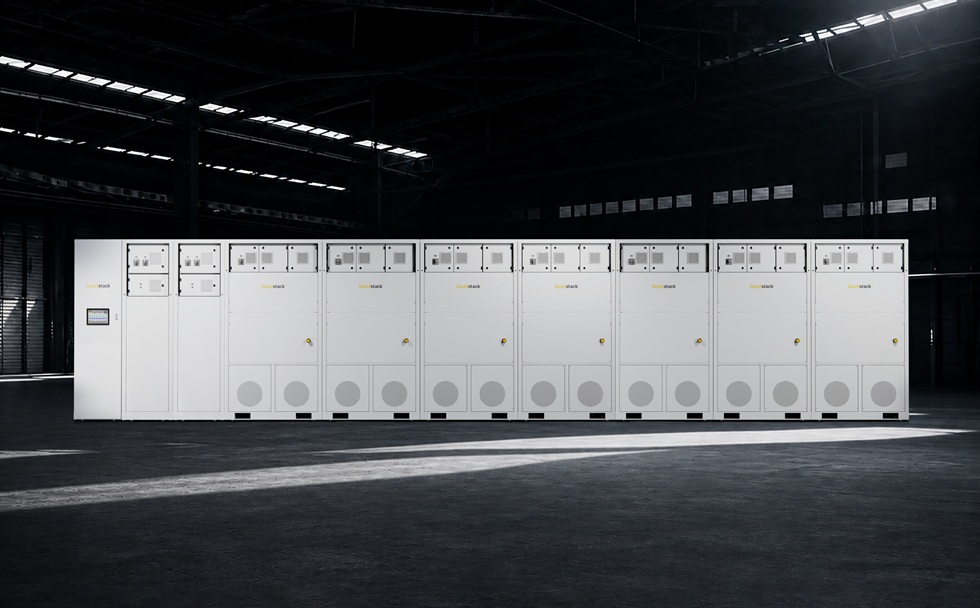
That challenge sits at the heart of LiquidStack’s latest expansion of its GigaModular cooling distribution unit platform, which the company says can now support deployments of up to 14MW through a modular architecture designed for AI data centres.
The announcement reflects a wider shift taking place across the data centre industry. As AI workloads become larger and more power intensive, operators are facing growing pressure to expand capacity rapidly while navigating constraints around power availability, construction timelines and infrastructure complexity.
According to LiquidStack, the expanded platform allows operators to add cooling capacity in 2.5MW increments rather than building for future demand from the outset. The company argues that such an approach can help align infrastructure investment more closely with actual AI deployment requirements.
Building infrastructure in stages
The significance of the announcement lies less in the product itself than in what it reveals about how the industry is adapting to the economics of AI.
For much of the cloud era, data centre expansion followed relatively predictable patterns. AI is changing those assumptions. Facilities are now being designed to support increasingly dense computing environments, while operators are often unsure how quickly future demand will materialise.
This uncertainty is creating interest in modular approaches that allow infrastructure to be expanded in phases rather than through large upfront investments. LiquidStack’s pay-as-you-grow architecture is intended to address precisely that challenge, enabling operators to scale cooling capacity alongside computing deployments.
The company said the platform has completed multi-module integration and full-load testing for deployments up to 14MW and has now been released for manufacturing.
The timing is notable. LiquidStack pointed to industry figures from CBRE showing a global weighted average data centre vacancy rate of 6.6 per cent during the first quarter of 2025, highlighting continued pressure on available capacity. As demand for AI infrastructure grows, operators are increasingly seeking ways to accelerate deployment while avoiding unnecessary complexity.
Cooling becomes strategic
The development also illustrates how cooling technology is becoming a strategic consideration rather than a supporting utility.
Historically, cooling systems attracted little attention outside specialist engineering circles. Today, they are becoming central to discussions about AI economics, deployment speed and long-term infrastructure planning.
As rack densities increase and next-generation GPU platforms consume more power, cooling systems must evolve alongside the computing hardware they support. This is driving investment across the sector in liquid cooling technologies capable of handling thermal loads that traditional air-cooling approaches may struggle to accommodate efficiently.
LiquidStack said its platform has been designed to support AI, high-performance computing and hyperscale data centre environments through centralised controls and a modular architecture intended to simplify expansion. The system has also been designed to support future generations of high-density computing platforms.
The broader message is clear. The AI industry may be driven by breakthroughs in software and silicon, but its future growth increasingly depends on solving practical engineering challenges. As organisations continue investing billions in AI capability, the ability to deploy power and cooling infrastructure quickly, efficiently and at scale is becoming one of the defining issues shaping the next phase of the technology sector.