For more than a decade, the economics of digital infrastructure have pushed compute further away from the people who depend upon it. As artificial intelligence moves beyond training models and into everyday operation, that trend is beginning to reverse, forcing the industry to rethink not just how AI infrastructure is built, but where it belongs.
For much of the AI boom, the industry’s ambitions have been measured in scale. Success has been defined by the size of GPU clusters, the capacity of hyperscale campuses and the race to secure ever larger power connections. Those developments will remain essential because training increasingly sophisticated foundation models demands extraordinary amounts of compute. Yet focusing exclusively on that part of the AI lifecycle risks overlooking a quieter change that could prove just as significant over the coming decade.
Once AI leaves the training environment and begins supporting enterprise applications, industrial operations, healthcare, financial services and public infrastructure, priorities begin to shift. Compute is no longer judged simply by capacity but by how quickly it responds, how reliably it operates and how confidently organisations can control the data and applications running on it. That inevitably raises questions about proximity, ownership and infrastructure strategy that carried far less weight during the first phase of cloud computing.
Christian Kallenbach, Head of Business Development, Sales & Marketing at GARBE Data Centers, believes the next wave of AI infrastructure will reflect that changing operational reality. Rather than replacing the hyperscale campuses currently dominating investment, he argues that inference workloads will create demand for a complementary layer of infrastructure located much closer to the organisations and communities it serves.
“Everybody is talking about AI, but increasingly the discussion is moving towards inference,” he explains. “Inference means low latency, and low latency means getting closer to where people actually use those applications. Instead of automatically thinking about remote greenfield locations, we believe there is a growing role for infrastructure located on the outskirts of cities and, in certain circumstances, within urban environments themselves.”
The future is unlikely to be defined by a choice between hyperscale campuses and urban infrastructure because training and inference solve fundamentally different problems. The largest facilities will continue to train frontier models, while many of the applications businesses and citizens use every day will increasingly benefit from infrastructure located much closer to the point of use.
Inference changes the geography of AI
For years, centralisation has been the natural direction of travel. Cloud computing rewarded scale, allowing organisations to consolidate applications inside increasingly large facilities where land, electricity and operations could be optimised. Improvements in network performance made physical distance largely invisible, reinforcing the assumption that location mattered less than efficiency.
Inference introduces a different equation. AI systems are expected to respond almost instantly, becoming part of operational processes rather than simply delivering information. Whether supporting autonomous manufacturing, assisting clinicians, analysing financial transactions or enabling intelligent public services, responsiveness becomes part of the value proposition.
“There is a lot of discussion around AI gigafactories, and they absolutely have their place,” Kallenbach adds. “We see something different developing alongside that. It is almost a return of edge computing, although edge can mean many things. What we are really talking about is bringing inference closer to where organisations and people actually need it.”
As infrastructure moves closer to the point of consumption, resilience, governance and control become significantly more important. That helps explain why discussions around sovereign AI have accelerated across Europe. For many organisations, sovereignty is less a geopolitical ambition than an operational requirement, providing certainty over where critical workloads reside, who operates the infrastructure and how sensitive data is governed.
“For many organisations, sovereignty starts with knowing exactly where their infrastructure is,” Kallenbach continues. “People increasingly want to know where their compute sits. They want access to it and they want confidence that their critical applications are separated from broader public cloud environments.”
These priorities also change how AI infrastructure is planned. Much of today’s discussion focuses on shortages of power, suitable land and planning capacity around established data centre markets, yet those challenges largely reflect the requirements of hyperscale development. Inference operates at a different scale, creating opportunities that much larger projects often overlook.
Rather than requiring hundreds of megawatts, smaller AI facilities may need existing, stranded electrical capacity measured in single-digit megawatts. Former industrial sites, redundant manufacturing facilities and underused commercial estates often retain substantial electrical infrastructure long after their original purpose has disappeared.
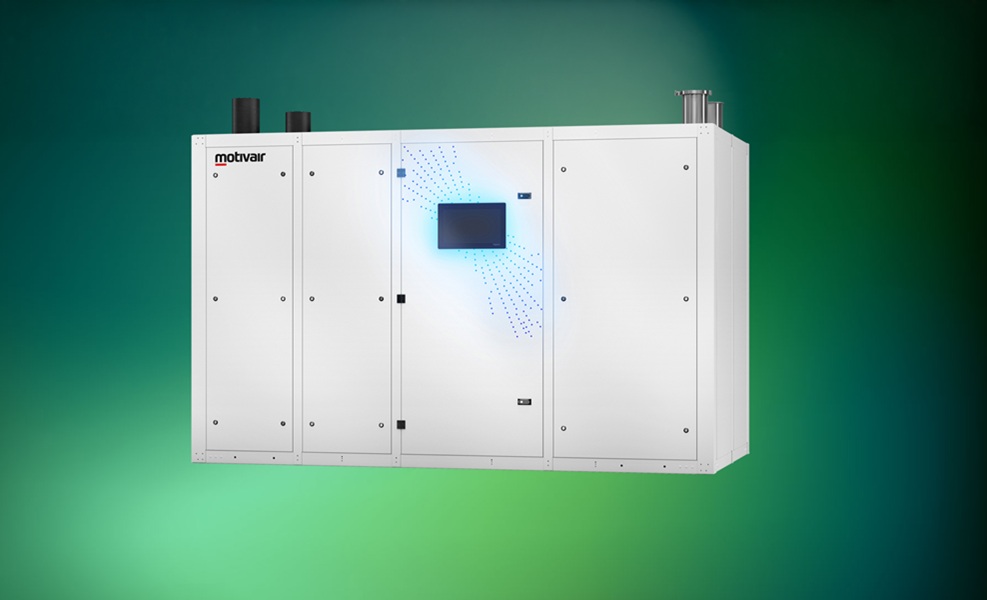
GARBE.DC’s GreenCube platform has been developed around precisely that opportunity. Designed as a modular, AI-ready facility with native support for liquid cooling, it can be deployed on comparatively compact sites while making use of existing power connections that would be insufficient for traditional hyperscale developments.
“We are typically looking for around six megawatts of connected power because that fits the GreenCube form factor,” Kallenbach explains. “Those smaller packets of available power still exist in many urban and industrial locations. If there was manufacturing activity on the site previously, the electrical infrastructure is often already there. That changes both the economics and the speed at which projects can move forward.”
The attraction is not simply that projects can be delivered more quickly. It also represents a different way of thinking about AI infrastructure. Rather than competing for entirely new sites or waiting years for major grid reinforcements, smaller deployments have the potential to become part of regeneration schemes that are already transforming former industrial districts. Compute capacity becomes another layer of modern urban infrastructure alongside commercial space, research facilities and advanced manufacturing.
GARBEs wider business provides a practical example of that philosophy. As part of a broader European real estate platform, the company is frequently involved in redeveloping brownfield sites where logistics, commercial property and infrastructure are planned together. Within that context, a modular AI facility becomes one component of a wider regeneration strategy rather than the development itself.
Winning acceptance may become as important as winning power
If AI infrastructure is moving closer to towns and cities, the industry faces a challenge it has largely been able to avoid until now. Engineering excellence alone will not determine whether projects succeed. Public perception, planning policy and architectural integration will increasingly influence where infrastructure can be built and how quickly developments move from concept to operation.
Traditional data centres have rarely been designed with urban integration in mind. Located on industrial estates or remote campuses, their appearance has always been secondary to resilience and operational efficiency. That approach becomes harder to defend when facilities are expected to sit alongside offices, research campuses or mixed-use developments where they form part of the local environment.
Kallenbach recalls a meeting that crystallised the issue. “I was at a meeting in London where somebody asked why every data centre looked like a prison. That question stayed with us because it highlighted how people outside the industry see these buildings. If infrastructure is going to move closer to cities, then it has to become something that can genuinely belong there.”
The observation highlights a growing disconnect between the industry and the communities it increasingly hopes to serve. Infrastructure professionals instinctively discuss resilience, cooling efficiency and energy performance. Local authorities and residents often begin somewhere entirely different. They want to know how a building will look, whether it contributes to the neighbourhood, how much noise it will create and whether the community gains anything in return for hosting it.
“If infrastructure is going to become part of the urban environment, then it has to contribute to that environment,” Kallenbach says. “People rightly expect these developments to fit into the places where they live and work. That means thinking beyond technical performance and considering architecture, sustainability and how the building integrates with the wider community from the outset.”
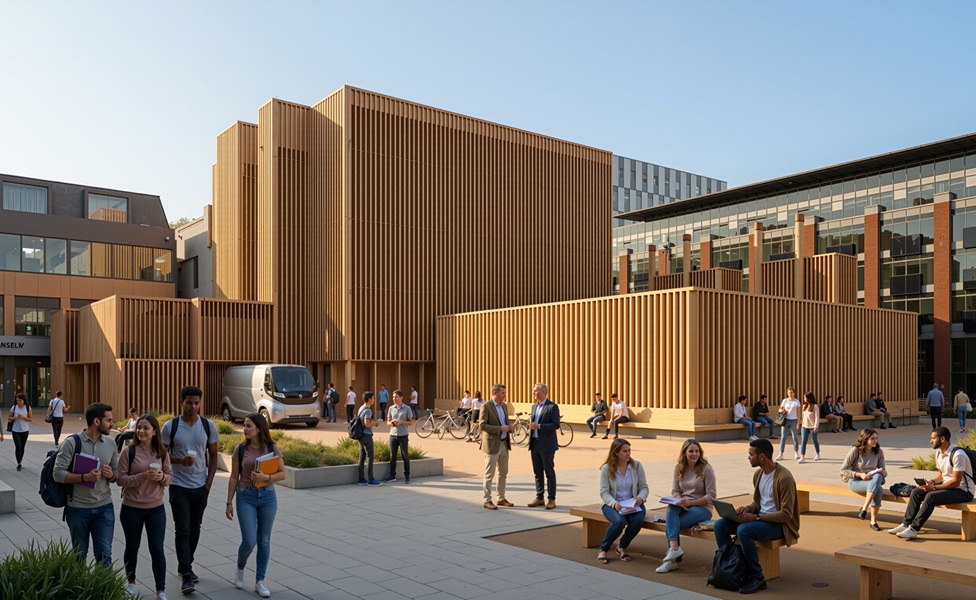
That thinking is reflected throughout the entire GreenCube concept. The platform places as much emphasis on architectural flexibility and urban integration as it does on technical performance, recognising that infrastructure designed for cities must satisfy planning expectations as well as engineering requirements. Compact modular construction, adaptable façades and liquid cooling allow the design to be incorporated into a variety of regeneration projects rather than forcing developments to conform to a conventional data centre blueprint.
The opportunity extends beyond aesthetics. Recovering waste heat, repurposing former industrial sites and making productive use of existing electrical infrastructure all provide ways for data centres to demonstrate wider civic value. Rather than being viewed solely as large consumers of electricity, they have the potential to become contributors to urban regeneration and regional economic growth.
“Historically, data centres have been designed almost entirely around operational efficiency,” Kallenbach explains. “That remains essential, but the conversation is changing. Today we also have to consider how these facilities support wider economic development, how they work within existing communities and how they create value beyond simply providing compute capacity.”
Security, however, remains non-negotiable. Enterprise AI infrastructure will continue to demand robust physical protection, operational resilience and tightly controlled access. The difference is that those requirements increasingly need to be integrated into the design of the building itself rather than communicated through fortress-like compounds surrounded by high fencing and extensive security perimeters.
Cities are also beginning to evaluate digital infrastructure in broader economic terms. Access to local AI capability has implications for universities, advanced manufacturers, healthcare providers, technology companies and public services that increasingly depend on high-performance computing. Data centres therefore become part of the conversation about regional competitiveness rather than simply another large consumer of power.
“The debate is sometimes presented as a choice between hyperscale facilities and distributed infrastructure, but we do not see it that way,” Kallenbach concludes. “Training models will continue to require very large campuses with enormous amounts of power. What inference changes is where AI delivers value. That creates demand for another layer of infrastructure located much closer to businesses, public services and the people using those applications every day.”
The AI industry will continue to build enormous campuses capable of training the world’s most advanced models. Nothing about the growth of inference diminishes that requirement. What it does challenge is the assumption that the story ends there.
Inference is where AI begins to deliver measurable economic value. It powers operational decisions, supports enterprise applications and enables services that millions of people use every day. As those workloads expand, infrastructure strategy becomes less about concentrating every workload into the largest possible facilities and more about placing intelligence where it can deliver the greatest operational impact.
For much of the cloud era, success was defined by the ability to abstract applications away from physical location. AI may mark the point at which geography becomes strategically important once again. Not because hyperscale infrastructure has reached its limits, but because intelligence increasingly depends on proximity, responsiveness and trust.
If that proves to be the defining characteristic of the inference era, the next generation of AI infrastructure will not simply be judged by the scale of the campuses it builds. It will also be judged by how effectively it connects intelligence with the places where businesses operate, public services are delivered and people live their lives. After spending the best part of two decades moving compute steadily away from the point of use, the industry may find that AI’s greatest long-term impact comes not from pushing infrastructure further away, but from bringing it back again.