The rapid increase in computing density associated with artificial intelligence is creating a new challenge for data centre operators. Delivering sufficient electricity to increasingly powerful racks is no longer simply a question of overall facility capacity, but of how that power is distributed within the data hall without restricting future expansion or operational flexibility.
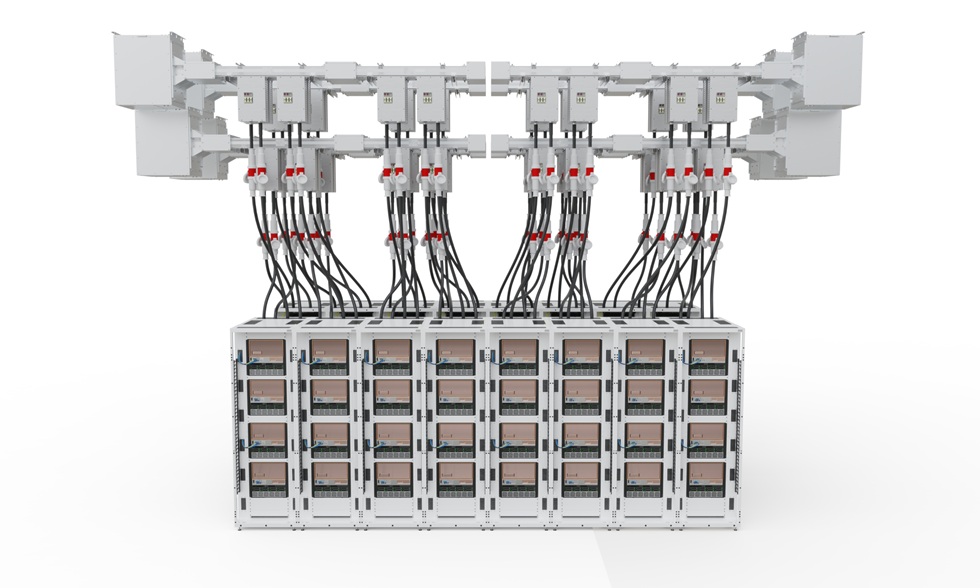
Legrand’s introduction of its Starline T5 DoubleBar track busway reflects this changing requirement. Designed for high-density AI and high-performance computing environments, the system combines two parallel T5 busbars to deliver up to 2,000 amps while retaining the flexibility of an open-channel power distribution architecture.
The development addresses a practical problem emerging as AI workloads push rack power requirements beyond 100kW. Conventional high-capacity busduct systems can provide the necessary electrical capacity but may limit the ability to reconfigure infrastructure, while more flexible track busway arrangements have traditionally involved compromises in available amperage.
Legrand says its new design combines the electrical capacity associated with conventional busduct systems with the ability to install and reposition power connections without redesigning the distribution network.
The Starline T5 DoubleBar supports rack loads of up to 150kW and is compatible with low-voltage direct current installations operating at up to 1,000V DC. Its parallel conductor arrangement increases both electrical capacity and the space available for plug-in connections without increasing the system’s footprint.
For operators planning AI deployments, this distinction matters because the configuration of computing equipment may change considerably during the operational life of a data centre. Infrastructure designed around one generation of hardware must increasingly accommodate subsequent changes in rack density and power requirements.
The system’s hot-pluggable tap-off capability allows connections to be installed or removed while the busway remains energised, avoiding the need for a system shutdown during reconfiguration. It also retains compatibility with existing Starline T5 plug-in units and has been designed to support future expansion to 5,000 amps.
Alongside the DoubleBar, Legrand has introduced a High-Capacity Plug-in Unit capable of delivering up to 250 amps. The intention is to supply higher-density racks through fewer individual connections, reducing the complexity associated with multiple lower-capacity units.
Mark Swift, Vice President of Engineering for Starline at Legrand, said operators have traditionally faced a choice between high-capacity but relatively rigid distribution systems and more adaptable track busways. The company argues that combining both characteristics will help facilities accommodate changing AI requirements without adding redundant distribution infrastructure.
The wider significance is that power distribution is becoming an increasingly important consideration in AI data centre design. While attention often concentrates on computing hardware, cooling systems and access to grid capacity, the electrical architecture within the data hall can also influence how effectively facilities adapt to new workloads.
As AI racks demand more power, operators will need distribution systems that deliver greater electrical capacity without making future changes prohibitively disruptive or expensive. Legrand’s approach illustrates how even established infrastructure components are being reconsidered as the physical requirements of AI computing continue to evolve.