The artificial intelligence boom is reshaping almost every layer of digital infrastructure, from power generation and cooling systems to the design of the data centre itself. Increasingly, even the server rack is becoming a strategic consideration as operators seek to accommodate larger and heavier computing equipment.
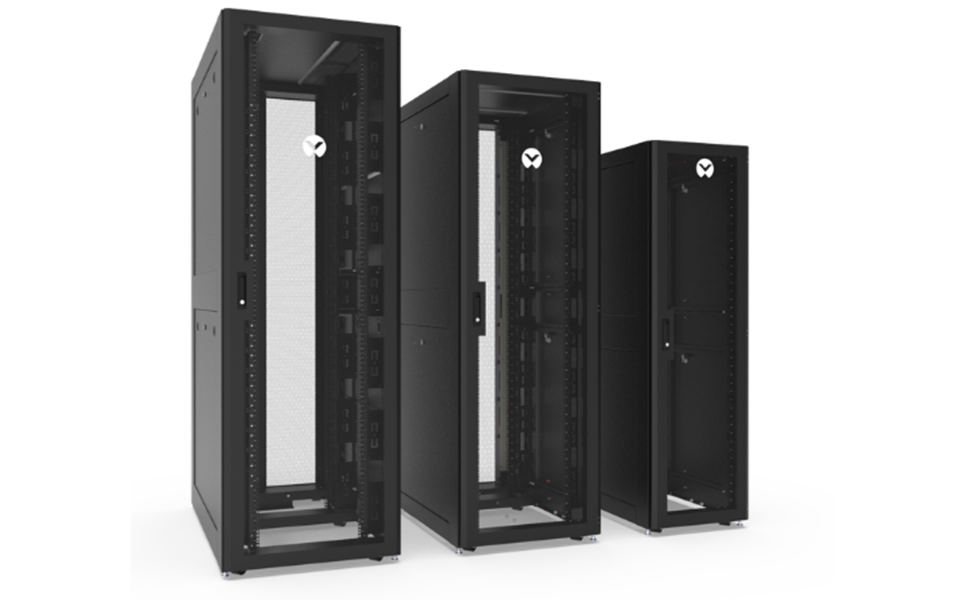
Vertiv has launched Rack Extreme, a new rack platform designed for high-density computing environments and AI workloads. The announcement reflects a broader shift taking place across the industry as data centre operators adapt facilities originally designed for traditional enterprise IT to support the demands of next-generation AI infrastructure.
The growth of AI training and inference workloads has driven a rapid increase in compute density, with organisations deploying more powerful systems that consume greater amounts of power and generate more heat. Supporting these environments requires not only advances in processors, cooling and power distribution, but also changes to the physical infrastructure that houses them.
While racks have historically been viewed as relatively standardised components, the emergence of AI has exposed new constraints around equipment weight, cabinet depth, airflow management and cable organisation.
The physical realities of AI
Much of the discussion surrounding artificial intelligence infrastructure focuses on semiconductors, software models and energy consumption. Less attention is paid to the physical challenges created when increasingly powerful systems are deployed at scale.
As computing density rises, data centre operators must accommodate larger and heavier equipment while maintaining effective airflow and ensuring infrastructure can be installed, moved and maintained safely.
Vertiv’s new rack platform has been designed to address these requirements through increased load ratings, deeper configurations and integrated cable management. The company said the platform supports static and dynamic loads of up to 4,500 pounds, or approximately 2,045 kilograms.
The distinction between static and dynamic capacity is becoming increasingly relevant in AI deployments. Traditional racks often support lower loads when being moved than when stationary, creating operational limitations when equipment must be repositioned within a facility. Vertiv said Rack Extreme maintains the same load capacity in both conditions, enabling full-rated mobility for densely configured systems.
The launch highlights how AI is creating new engineering considerations throughout the data centre environment. Infrastructure once viewed as secondary is increasingly becoming part of the overall performance equation.
Density changes the design equation
The rise of high-performance computing and AI clusters is also placing greater emphasis on airflow management and thermal integration.
As rack power densities increase, operators are under pressure to optimise every aspect of the environment surrounding computing equipment. This includes cable routing, airflow pathways and compatibility with advanced cooling technologies.
Vertiv said Rack Extreme incorporates integrated airflow and cable management features, including high open-area mesh doors, flexible rail systems, vertical cable bars and mounting options for rack power distribution units. The platform has also been designed to integrate with a range of thermal management technologies, including rear-door heat exchanger systems and liquid cooling infrastructure.
The growing importance of these capabilities reflects wider changes across the industry. AI deployments are increasingly being designed as interconnected infrastructure systems rather than collections of individual technologies. Power delivery, cooling, networking and physical equipment housing must all operate together if operators are to achieve the performance and efficiency targets demanded by modern workloads.
Infrastructure adapts to the AI era
One of the more significant implications of AI’s growth is that infrastructure requirements are evolving faster than many existing facilities were originally designed to accommodate.
The challenge facing operators is not simply adding more computing capacity, but ensuring the supporting environment can scale alongside it. That is prompting renewed investment in equipment that can support higher densities while maintaining operational flexibility.
Vertiv’s Rack Extreme platform is available in multiple sizes and configurations and is designed to support deployment alongside power, cooling and management technologies already used within modern data centres.
The announcement serves as another example of how the AI revolution is extending far beyond processors and software. As organisations continue to invest in larger and more powerful computing environments, even the most fundamental elements of data centre design are being re-engineered to meet the demands of the next generation of artificial intelligence infrastructure.