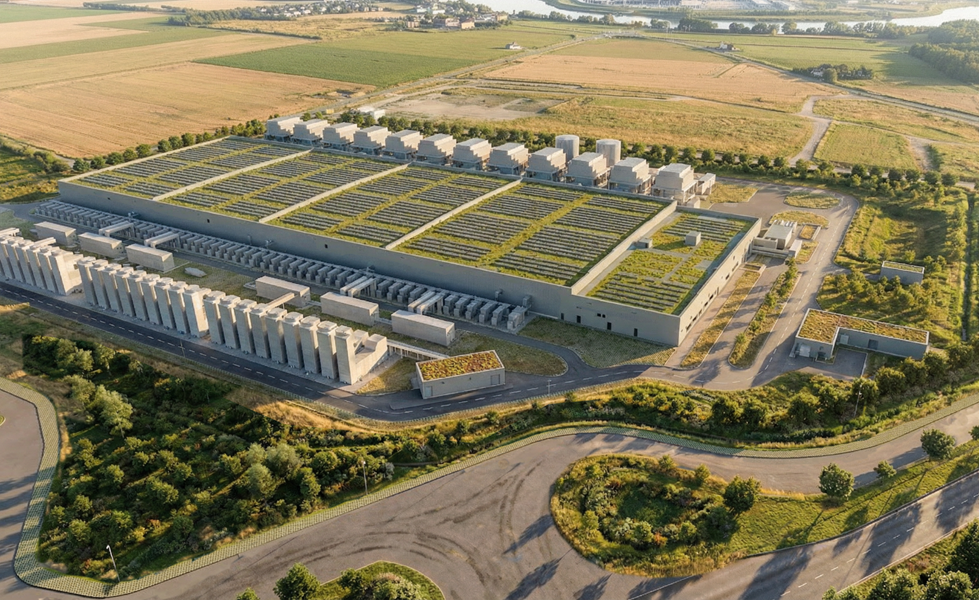
Google has begun construction of a new data centre in Kronstorf, Austria, marking a further expansion of the physical infrastructure required to support artificial intelligence and digital services across Europe.
The facility is intended to meet growing demand for Google’s platforms, including Search, YouTube, Maps and Workspace, while extending the company’s AI capabilities. It also reflects a broader shift in how digital infrastructure is being positioned, not simply as a backend utility, but as a strategic asset tied to national and regional economic priorities.
Once completed, the site will generate around 100 direct jobs, with additional employment created through construction, supply chains and local businesses. For Upper Austria, the development is being framed as part of a wider ambition to establish the region as a hub for digital infrastructure and innovation.
infrastructure becomes a strategic asset
The Kronstorf project illustrates how the expansion of AI is reshaping investment decisions across Europe. Data centres are no longer treated as interchangeable nodes within a global cloud, but as locally embedded systems that influence energy, labour markets and regional development.
Google said the facility will be equipped to support off-site heat recovery, allowing waste heat to be reused by external partners once an offtaker is identified. The site will also include a green roof with solar panels to contribute clean energy directly to operations.
These design choices reflect a growing need to reconcile the energy intensity of AI systems with decarbonisation goals. Google has set an ambition to operate on carbon-free energy around the clock across all grids where it operates, and the Austrian facility is intended to contribute to that objective while supporting a reliable and affordable energy system.
Water management is also emerging as a defining constraint. Google said it aims to replenish more freshwater than it consumes by 2030 and will establish a fund in Kronstorf to support the local Enns river ecosystem, working with the Upper Austrian Fisheries Association. This aligns with a wider industry trend in which access to water resources is becoming a critical factor in data centre siting and design.
skills and sovereignty in focus
Alongside the physical infrastructure, the project places emphasis on workforce development and skills. Google announced a multi-year collaboration with the University of Applied Sciences Upper Austria to create AI-focused curricula and certifications, aimed at equipping students with capabilities relevant to digital infrastructure and emerging technologies.
This reflects a broader recognition that AI deployment is constrained not only by compute capacity, but also by the availability of skilled labour. Building and operating data centres requires expertise across areas such as networking, cooling systems and data analytics, creating new demands on education systems and local labour markets.
Google has been present in Austria since 2006 and said it has trained more than 140,000 individuals in digital skills since 2014. The new initiative extends that effort into more specialised AI-related domains, aligning workforce development with infrastructure expansion.
The company is also establishing an information centre in Kronstorf to engage with the local community and provide visibility into its digital infrastructure and sustainability efforts. This reflects increasing scrutiny of large-scale data centre projects, particularly in relation to their environmental and economic impact.
The Kronstorf development highlights a broader shift underway across the technology sector. As AI systems scale, they are becoming inseparable from the physical environments that support them, from power grids and water systems to education pipelines and regional planning frameworks.
In that context, the expansion of data centre infrastructure is no longer simply about increasing capacity. It is about redefining the relationship between technology companies and the regions in which they operate, as artificial intelligence moves from an abstract capability to a material force shaping economic and environmental outcomes.