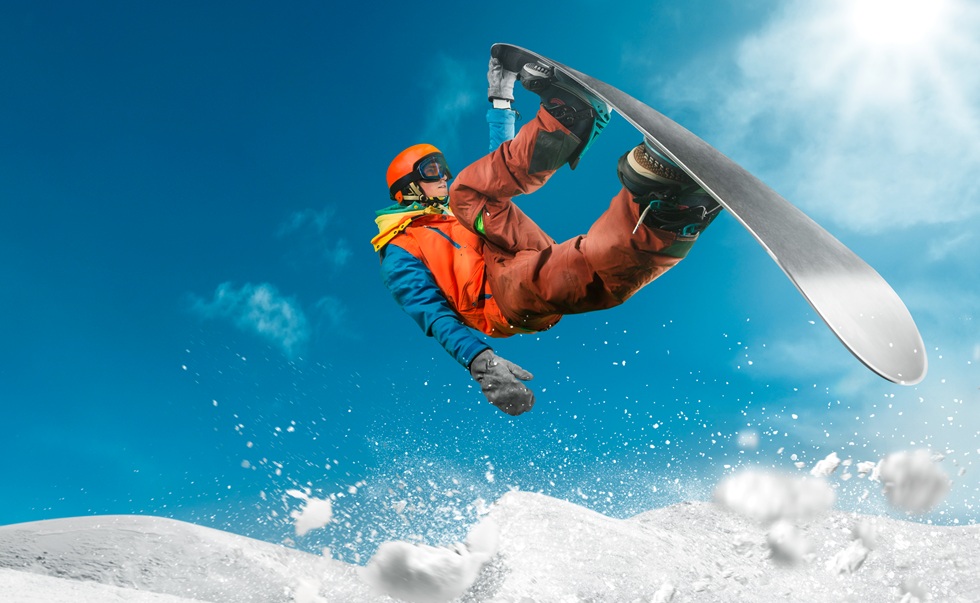
Artificial intelligence is increasingly being judged not by what it predicts on screens, but by how well it performs in the physical world. Nowhere is that challenge more acute than in elite winter sports, where athletes move at high speed, wear bulky equipment and operate in environments hostile to sensors and traditional data capture. A new collaboration between U.S. Ski & Snowboard and Google offers a glimpse of how AI may begin to close that gap.
The two organisations have announced an experimental AI-based video analysis tool built on Google Cloud, designed to deliver near real-time insights into skiing and snowboarding performance. Developed alongside elite athletes from the Stifel U.S. Freeski Team and the Hydro Flask U.S. Snowboard Team, the system aims to replace a long-standing trade-off in sports science between subjective coaching observation and laboratory-grade motion analysis.
For decades, high-precision biomechanical data has been largely confined to controlled indoor environments, relying on athletes wearing sensor-laden suits and operating within multi-camera rigs. Such approaches are impractical on mountainsides and often fail in sub-zero, high-velocity conditions. The new tool seeks to bring that level of insight directly onto the slope.
From laboratory capture to on-mountain intelligence
At the core of the system is markerless motion capture powered by AI research from Google DeepMind. Using video alone, the technology can map an athlete’s body in three dimensions, even when obscured by winter clothing and protective equipment. This allows coaches to analyse movement without requiring athletes to wear sensors or modify how they train.
Google Cloud engineers worked alongside athletes and coaches in Austria and Colorado to refine the system under real-world conditions. The result is a workflow where coaches can record video using a standard smartphone from the side of a run or at the finish. Footage is uploaded to a dashboard where it is processed using Google’s AI infrastructure, including custom TPUs in its data centres.
This approach reflects a broader shift in AI development. Rather than asking humans to adapt to technology, the system is designed to work within existing routines and environments. Athletes train in their usual gear, on real terrain, while AI adapts to the complexity of the setting.
Turning video into coaching dialogue
One of the most distinctive aspects of the tool is how insights are delivered. Instead of producing static charts or raw metrics, the system uses the reasoning capabilities of Gemini to allow conversational interaction with performance data. Coaches and athletes can ask natural language questions about a run or a trick and receive estimated answers grounded in the analysed footage.
For example, a coach might ask how much faster a rider needed to rotate to complete a jump, based on measured airtime. The system estimates angular velocity and contextualises the answer within the athlete’s previous performances. Over time, sessions are stored in a centralised database, allowing for longitudinal analysis across training cycles and competitions.
Anouk Patty, chief of sport at U.S. Ski & Snowboard, described the tool as a significant development for coaching. Video has long been the most widely used training aid, she noted, but analysing it has traditionally been manual and time-consuming. By layering AI-driven insight onto familiar footage, coaches gain additional context without disrupting established practices. She also emphasised that safety is as important as performance, with better understanding of movement patterns supporting more informed training decisions.
A wider signal for AI in human performance
While the immediate focus is elite winter sport, Google sees broader implications. Oliver Parker, vice president of global generative AI at Google Cloud, said the collaboration demonstrates how full-stack AI can move beyond historical analysis to near real-time, prescriptive guidance. His argument is that if AI can function reliably in extreme outdoor conditions with world-class athletes, similar techniques could be applied to rehabilitation, amateur sport and other forms of human movement.
For U.S. Ski & Snowboard, the project remains experimental, with athletes and coaches continuing to prototype the system ahead of the Olympic Winter Games. Yet its significance extends beyond medals. It illustrates how AI is beginning to interpret complex physical motion outside controlled environments, using everyday devices as data sources.
As AI systems increasingly move from digital prediction into physical understanding, sport is emerging as an unlikely proving ground. The mountain, with its unpredictability and constraints, offers a demanding test of whether AI can truly see, reason and assist in the real world.