The next phase of artificial intelligence competition is increasingly being defined not by software alone, but by the hardware that underpins it. As demand for large-scale inference and real-time AI services grows, companies are moving to design their own silicon, seeking greater control over performance, efficiency and cost.
Meta has expanded its partnership with Broadcom to co-develop multiple generations of its Meta Training and Inference Accelerator chips, known as MTIA. The agreement focuses on building custom processors designed to support AI workloads across Meta’s platforms, including recommendation systems and generative AI applications.
The collaboration reflects a broader shift in how large technology companies approach AI infrastructure. Rather than relying solely on general-purpose processors, organisations are increasingly developing purpose-built accelerators tailored to specific workloads. In Meta’s case, this involves optimising for inference and recommendation at scale, areas that underpin much of its user-facing services.
Custom silicon becomes strategic infrastructure
The MTIA programme is positioned as part of a wider portfolio approach, in which different types of accelerators are matched to different AI tasks. This reflects the growing diversity of workloads, from training large models to delivering real-time responses to billions of users.
The partnership with Broadcom extends beyond chip design to include advanced packaging and networking, areas that are becoming critical as AI systems scale. High-bandwidth connectivity between processors is essential for maintaining performance across large compute clusters, and Broadcom’s Ethernet technologies are intended to support this requirement.
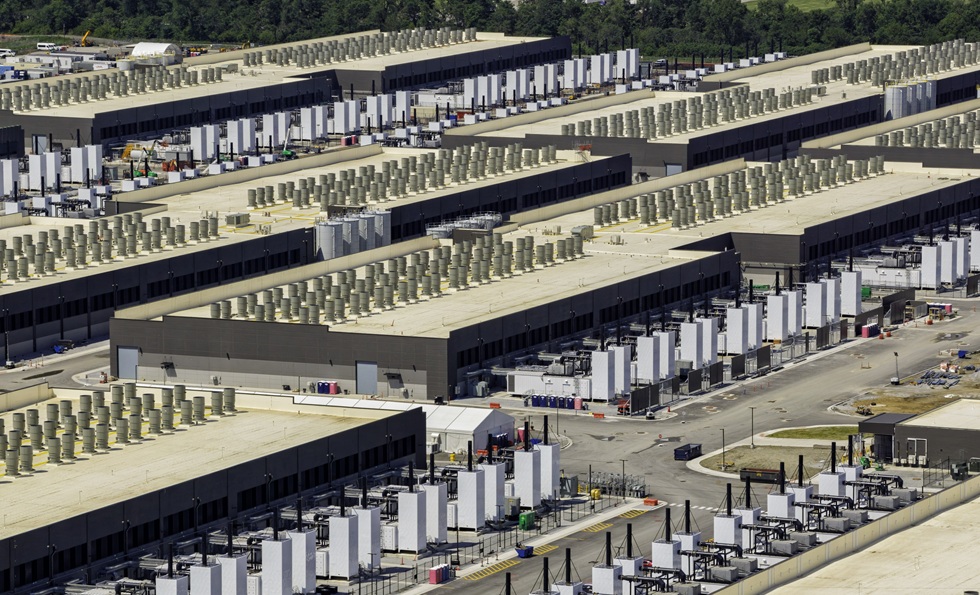
The scale of the deployment underlines the ambition of the project. The agreement includes an initial commitment exceeding one gigawatt of compute capacity, with plans for a multi-gigawatt rollout over time. This level of investment highlights how energy and infrastructure are becoming central considerations in AI development, as companies seek to balance performance with operational efficiency.
The use of Broadcom’s XPU platform enables the co-design of custom accelerators across multiple generations, allowing Meta to refine its hardware in line with evolving AI requirements. This iterative approach suggests that silicon development is becoming an ongoing process rather than a one-off investment, closely tied to the trajectory of AI models and applications.
Infrastructure shapes the future of AI
The emphasis on custom silicon points to a deeper transformation in the AI landscape. As systems scale, the limitations of general-purpose hardware become more apparent, prompting a move towards specialised solutions that can deliver higher efficiency and lower total cost of ownership.
For Meta, this strategy is linked to its broader ambition of delivering what it describes as personal superintelligence to a global user base. Achieving this requires not only advances in models, but also the ability to run those models efficiently at scale, handling vast volumes of data and interactions in real time.
The partnership also has organisational implications. Broadcom’s chief executive, Hock Tan, will transition from Meta’s board to an advisory role, providing guidance on the company’s custom silicon roadmap. This reflects the increasing importance of hardware expertise in shaping AI strategy at the highest levels of technology companies.
What is emerging is a shift in where competitive advantage in AI is located. While model development remains important, the ability to design and operate the underlying infrastructure is becoming equally critical. As companies invest in custom silicon and large-scale compute capacity, the focus is moving towards the systems that enable AI to function in practice.
The expansion of Meta’s partnership with Broadcom illustrates how this transition is unfolding. In a landscape where performance, efficiency and scale are tightly interconnected, the future of AI may depend as much on the chips that power it as on the algorithms that define it.