The industrial sector’s approach to artificial intelligence is shifting as companies confront the limits of general-purpose models in complex operational environments. What is emerging is a more specialised form of AI, designed to operate within the constraints and realities of manufacturing systems rather than abstract digital workflows.
A collaboration between Infor and Amazon Web Services reflects this transition, focusing on the deployment of industry-specific AI agents capable of reasoning, planning and acting across manufacturing processes. Built on AWS infrastructure, the systems are intended to address what both companies describe as a scaling challenge, moving AI from isolated pilots into enterprise-wide deployment.
The shift highlights a broader change in how AI is being evaluated within industry. Early experimentation has given way to a focus on operational impact, with companies seeking systems that can integrate directly into production environments, supply chains and financial processes. In manufacturing, where workflows are tightly coupled and often highly specialised, this has exposed the limitations of generic AI approaches.
Specialisation replaces generalisation
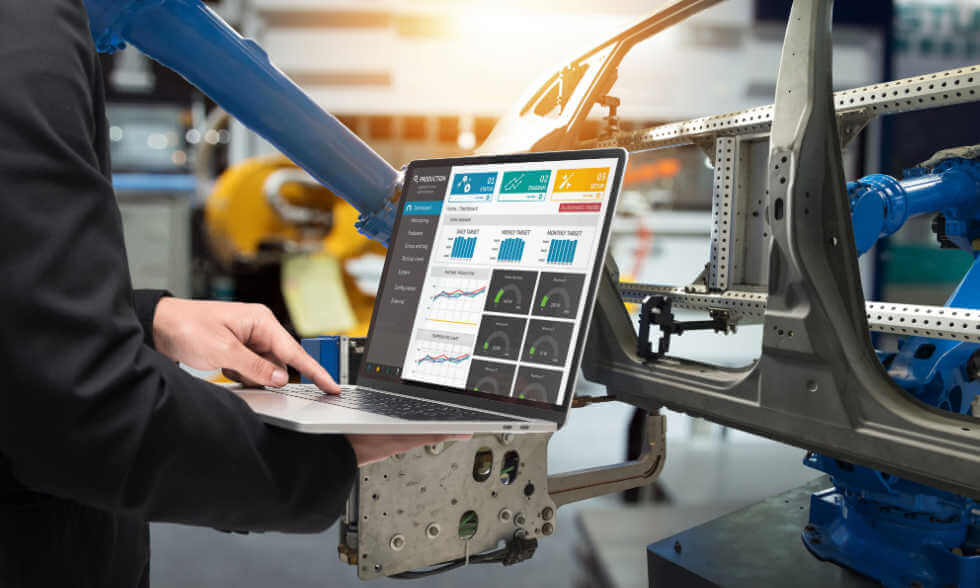
The collaboration centres on the development of AI agents designed to understand manufacturing-specific processes, including bill of materials structures, supply chain dependencies and shop floor operations. These agents are deployed across a range of functions, from project management and inventory flow to financial oversight and quality control.
This level of integration reflects the complexity of industrial environments, where small inefficiencies can have significant downstream effects. By embedding AI directly into these workflows, the intention is to identify bottlenecks, predict disruptions and automate responses in real time.
The emphasis on industry-specific intelligence suggests that the next phase of AI adoption will depend less on the breadth of a model’s capabilities and more on its ability to operate within defined contexts. For manufacturing organisations, this means systems that can interpret operational data and act on it in ways that align with existing processes and constraints.
The collaboration also includes tools that allow customers to develop and deploy their own customised agents, using AWS services such as Amazon Bedrock and Amazon SageMaker. This reflects the need for flexibility, as manufacturing environments vary significantly across sectors and individual organisations.
From pilot projects to operational systems
Evidence of this shift can be seen in early deployments. Xpress Boats, a manufacturer based in Arkansas, has used Infor’s tools to analyse and optimise its processes, identifying bottlenecks in areas such as procurement, order management and production planning. According to the company, this has resulted in a 98 per cent improvement in the speed of diagnosing process issues, a 95 per cent reduction in returns processing time and a 50 per cent reduction in expedited shipping costs.
While these figures point to tangible benefits, they also illustrate the broader challenge facing the sector. Scaling AI in manufacturing requires not only technical capability, but also the ability to integrate systems across multiple functions and ensure that insights can be acted upon effectively.
The deployment of AI agents across financial operations, inventory management and project delivery highlights how these systems are moving beyond analytical roles into decision-making and execution. This raises new questions about governance, reliability and the extent to which automated systems can be trusted to manage critical operations.
The collaboration between Infor and AWS suggests that the future of AI in manufacturing will be shaped by this balance between capability and control. As organisations move from experimentation to production, the focus is shifting towards systems that can operate at scale within complex environments.
What is becoming clear is that the industrial application of AI will not be driven by general-purpose models alone. Instead, it will depend on the development of specialised systems that understand the nuances of specific industries. In manufacturing, where efficiency, cost and reliability are tightly interconnected, that distinction may determine whether AI delivers meaningful value or remains confined to isolated use cases.