Artificial intelligence is beginning to reshape marketing in ways that extend beyond content generation, moving into the orchestration of entire workflows. What is emerging is a model in which AI systems do not simply assist human teams, but plan, create and execute campaigns across complex digital environments.
A set of expanded collaborations between NVIDIA, Adobe and WPP reflects this shift towards what is described as agentic AI. The initiative brings together Adobe’s creative and customer experience platforms, WPP’s marketing expertise and NVIDIA’s computing and software stack to support the deployment of AI agents within enterprise marketing operations.
The development points to a broader change in how organisations approach customer engagement. As demand for personalised experiences increases, brands are under pressure to deliver content that is tailored to individual audiences, products and channels, often in real time. Traditional campaign models, built around fixed assets and long production cycles, are struggling to meet these expectations.
From content creation to orchestration
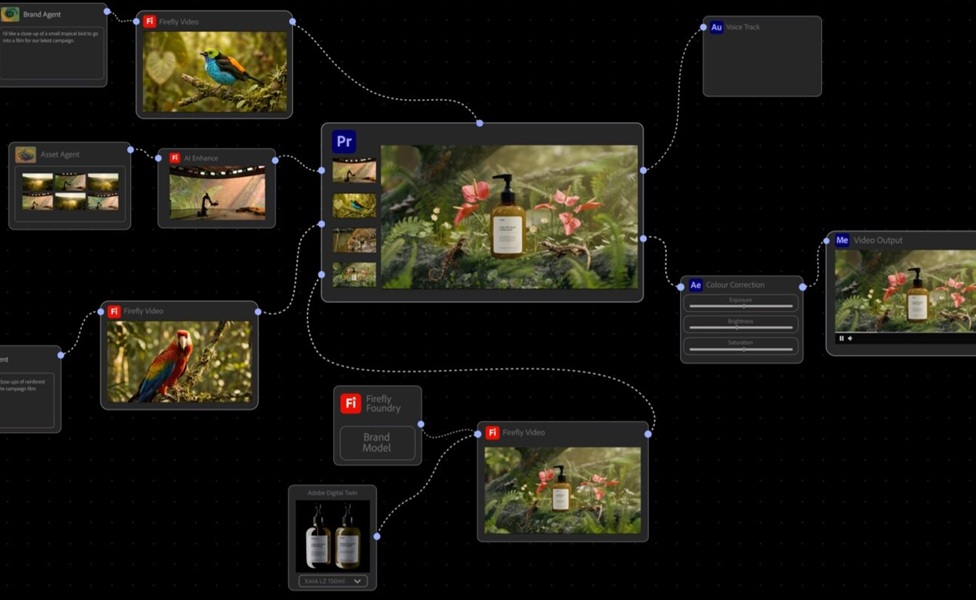
The collaboration focuses on enabling AI agents to manage end-to-end workflows, from generating and adapting content to activating it across different platforms. Adobe is developing agents capable of producing and versioning assets, while its CX Enterprise Coworker system is designed to coordinate downstream processes such as personalisation and delivery.
This approach reflects a shift from discrete tasks to continuous operations. Rather than producing campaigns in stages, organisations are moving towards systems that can update offers, imagery and messaging dynamically, responding to changing conditions and user behaviour. The implication is that marketing becomes an ongoing process rather than a series of defined projects.
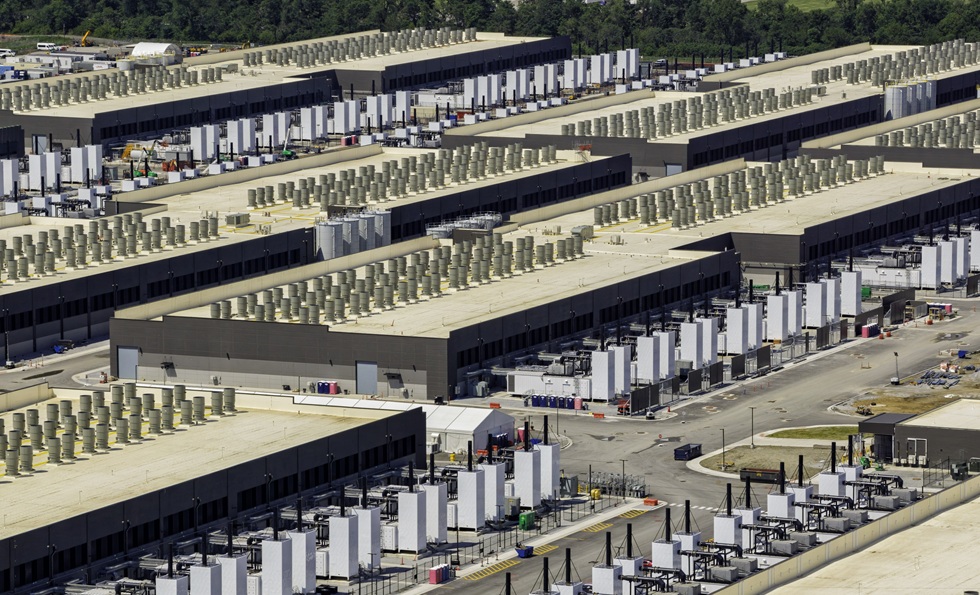
Underlying this model is NVIDIA’s infrastructure, including its Nemotron models, Agent Toolkit and OpenShell runtime. These technologies are intended to support the development and execution of agent-based systems, providing the computational and operational foundation required to run complex workflows at scale.
The inclusion of a cloud-based 3D digital twin capability, built on NVIDIA Omniverse libraries, adds another dimension to this shift. By creating persistent digital representations of products, organisations can automate the generation of high-fidelity content across multiple formats and markets, allowing AI agents to work with consistent, structured assets.
Governance becomes central to AI deployment
As AI systems take on more active roles, the question of control becomes increasingly important. The collaboration places significant emphasis on governance, with agents operating within defined environments designed to ensure compliance, consistency and auditability.
NVIDIA’s OpenShell runtime is intended to provide this layer of control, enabling policy-based execution within secure, isolated environments. This allows organisations to define what an agent is permitted to do, rather than relying solely on general policies that may be difficult to enforce in practice.
The ability to keep workflows and data within defined trust boundaries is also a key consideration, particularly as agents begin to interact with sensitive information and trigger actions across multiple systems. In this context, governance is not treated as an additional layer, but as an integral part of how AI systems are designed and deployed.
The collaboration suggests that the next phase of AI in marketing will be shaped by the balance between automation and control. While agentic systems offer the potential to deliver personalised content at scale, they also introduce new risks related to consistency, compliance and brand integrity.
What is becoming clear is that the role of AI in marketing is expanding from creation to execution. As these systems become more autonomous, the infrastructure and governance frameworks that support them will determine how effectively organisations can adopt them. The shift is not simply about producing more content, but about rethinking how marketing operates as a continuous, data-driven system.