Manufacturing is entering a period of structural change as artificial intelligence moves from isolated applications into the core of industrial operations. What was once a question of whether to adopt AI has shifted towards how quickly it can be deployed at scale, and what kind of infrastructure is required to support it.
At Hannover Messe 2026 in Germany, NVIDIA and its partners presented a view of this transition in progress. The technologies on display ranged from AI-driven engineering tools and factory-scale digital twins to vision-based AI agents and autonomous robotics, all pointing towards a model in which production systems are increasingly defined by software, simulation and real-time data.
The developments reflect broader pressures across the manufacturing sector. Faster design cycles, constraints on skilled labour and the need for more efficient operations are driving organisations to adopt systems that can respond dynamically rather than operate within fixed processes. In this context, AI is becoming less an optimisation tool and more a foundational layer of industrial activity.
Infrastructure defines the pace of change
A central theme emerging from the event is the growing importance of infrastructure in enabling AI at scale. Running advanced models across factories and supply chains requires systems that can handle large volumes of data while maintaining security and operational control.
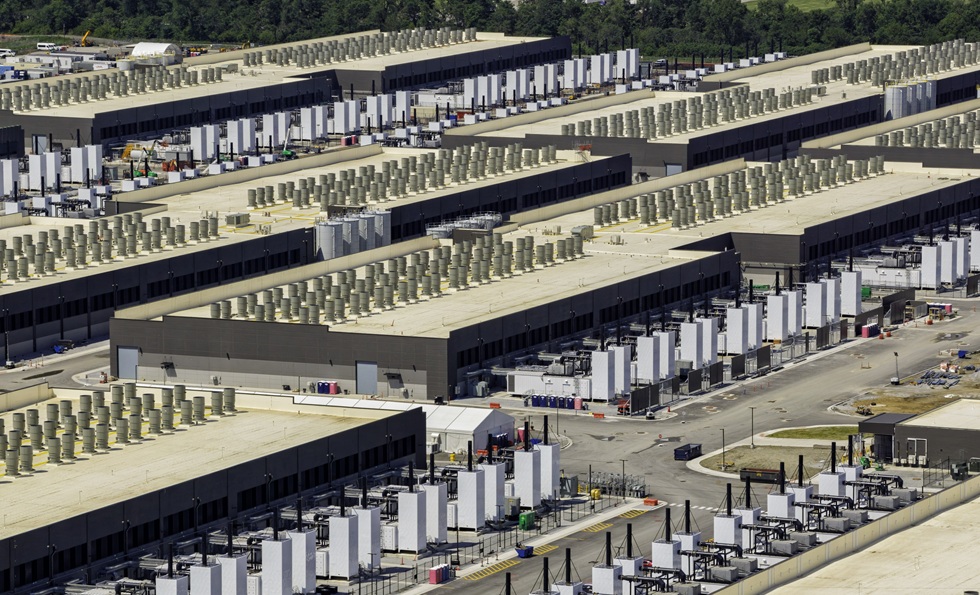
One example highlighted is the Industrial AI Cloud, built in Germany by Deutsche Telekom on NVIDIA infrastructure. Positioned as a sovereign platform, it is designed to provide a secure and scalable foundation for deploying AI and robotics across European industries. Companies including SAP, Siemens and PhysicsX are using the platform to run workloads ranging from real-time simulation to digital twin modelling and software-defined robotics.
The concept of sovereignty reflects a growing concern about where and how AI systems are operated. As industrial processes become more dependent on data and computation, control over infrastructure is increasingly seen as a strategic requirement rather than a technical detail.
Hardware providers including Dell Technologies, IBM and Lenovo are also contributing to this ecosystem, demonstrating systems designed to support AI workloads from edge environments through to large-scale data centres.
Simulation and autonomy reshape operations
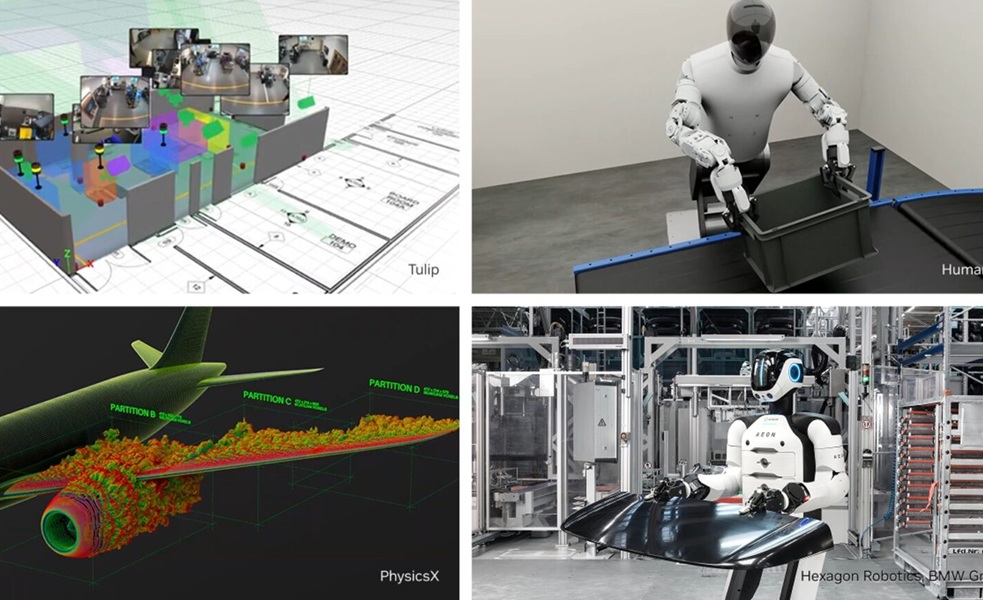
Beyond infrastructure, the integration of AI into engineering and operations is changing how factories are designed and managed. Software platforms from companies such as Dassault Systèmes and Synopsys are incorporating AI-driven simulation capabilities, allowing engineers to test and refine systems in real time before they are deployed.
Digital twins are becoming a key component of this approach. By creating virtual representations of physical assets and processes, manufacturers can simulate performance, identify potential issues and optimise operations without disrupting production. This is being extended to full factory environments, where entire systems can be modelled and adjusted continuously.
AI agents are also moving onto the factory floor, where they are being used to analyse data from cameras, sensors and operational systems. These agents can identify patterns, detect anomalies and provide insights to operators in real time, supporting decisions related to quality control, efficiency and safety.
The development of autonomous robotics represents a further step. Systems demonstrated at the event show robots capable of performing tasks within production environments while adapting to changing conditions. Advances in simulation and training are reducing the time required to develop and deploy these systems, with some processes compressed from years to months.
What emerges from these developments is a redefinition of the factory itself. Production environments are no longer static systems defined by machinery and processes, but dynamic networks of data, models and intelligent agents. As AI becomes embedded across design, simulation and execution, the boundary between digital and physical operations is beginning to dissolve.
The implications extend beyond efficiency gains. As manufacturing systems become more autonomous and interconnected, the ability to manage, govern and secure these environments will become increasingly critical. The transformation under way suggests that the future of industrial production will be determined not only by what is built, but by how intelligently the systems that build it can operate.