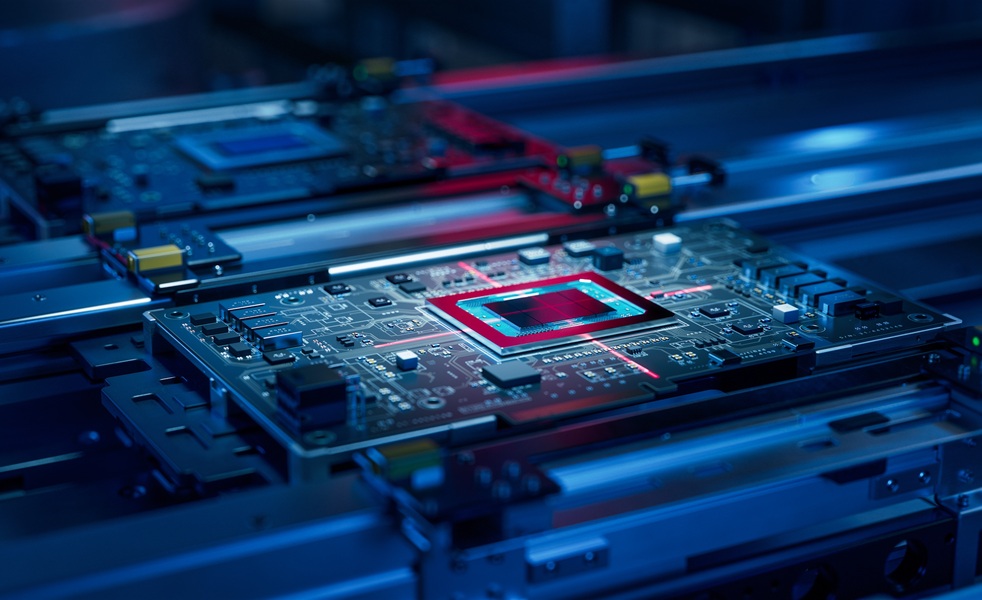
Artificial intelligence and high-performance computing are reshaping the fundamentals of how data centres manage electricity. The surge in demand from data-intensive workloads is pushing racks far beyond the power densities of a decade ago, creating fresh challenges in load balancing, stability and resilience.
Vertiv has expanded its PowerIT rack power distribution units (PDUs) to address this shift. The new models, available in North America, Europe, the Middle East and Africa, can now handle up to 57.6 kilowatts per rack, a significant increase in capacity aimed squarely at AI and HPC deployments.
Where once a rack might have supported a few kilowatts, operators are now dealing with racks running well above 25 kW. Training large language models, running simulations, or supporting advanced analytics creates a constant draw that existing infrastructure can struggle to sustain. The move towards three-phase power distribution, whether 208V Delta in North America or 240/415V WYE in EMEA, reflects the need to spread that load evenly, reducing the risk of overloads and stabilising voltage across dense computing environments.
The growth of AI has changed the way energy is consumed in data centres. Rather than smooth, predictable loads, operators are facing sudden surges tied to intensive training cycles or large-scale inference requests. Ensuring that power can be delivered reliably to every node becomes as critical as the algorithms running on the hardware. Failures are no longer measured in minutes of downtime, but in interrupted learning runs that can cost organisations millions in wasted compute hours.
Managing power in real time
As densities increase, the ability to monitor and manage power at a granular level is becoming central to data centre operations. Vertiv’s updated PowerIT models integrate real-time power usage data, allowing operators to see precisely how workloads are consuming electricity and to optimise accordingly.
In high-density environments, conditions are often demanding: high heat, high humidity and constant operational pressure. Rack PDUs must not only distribute power but also withstand extremes while maintaining integrity. The new models are designed to operate at temperatures up to 60°C and in humidity approaching 95 per cent, an indication of the conditions that can arise when cooling systems are pushed to their limits by AI-driven loads.
Security has also become an issue in power management. As more monitoring systems connect to networks, the risk of interference grows. Some of the monitored models include secure boot features and hardware-based trust anchors designed to prevent unauthorised modifications to firmware, reflecting the rising priority of cyber resilience within operational technology.
Adapting infrastructure for the next phase of AI
The acceleration of AI and HPC adoption has made flexibility a necessity. Data centres need to configure systems to suit varied workloads, from research laboratories to hyperscale cloud operators. Options for remote outlet-level control and configure-to-order designs are part of a broader shift towards tailoring infrastructure rather than relying on uniform solutions.
The expansion of high-density computing is not a marginal issue. It is redefining the economics of the data centre industry and altering the risk calculations for operators. Energy use, resilience, and security now converge at the rack level, where the physical infrastructure underpins the digital ambitions of businesses investing heavily in AI.
As artificial intelligence applications multiply, the question is no longer whether data centres can provide the compute power. The issue is whether the underlying electrical infrastructure can keep pace. The expansion of rack power distribution units to higher capacities signals the direction of travel: a world in which power engineering becomes as central to AI progress as algorithms and silicon.