The race to develop more capable artificial intelligence systems has captured most of the headlines, but a growing debate within the technology sector suggests the real challenge may lie elsewhere. As AI investment accelerates, attention is increasingly shifting towards the infrastructure needed to support it, from power networks and cooling systems to the physical design of the next generation of data centres.
That shift is likely to be a central theme at Datacloud Global Congress 2026, where Schneider Electric plans to showcase technologies designed to support large-scale AI deployments. The company’s presence at the event reflects a broader industry recognition that AI’s future is becoming inseparable from the infrastructure required to power, cool and operate it.
The scale of investment anticipated over the coming years illustrates why infrastructure has become such a critical issue. Schneider Electric cites Morgan Stanley Research forecasts suggesting that almost $3 trillion of AI-related infrastructure investment will flow through the global economy by 2028. Gartner forecasts worldwide AI spending will exceed $2.5 trillion during 2026 alone.
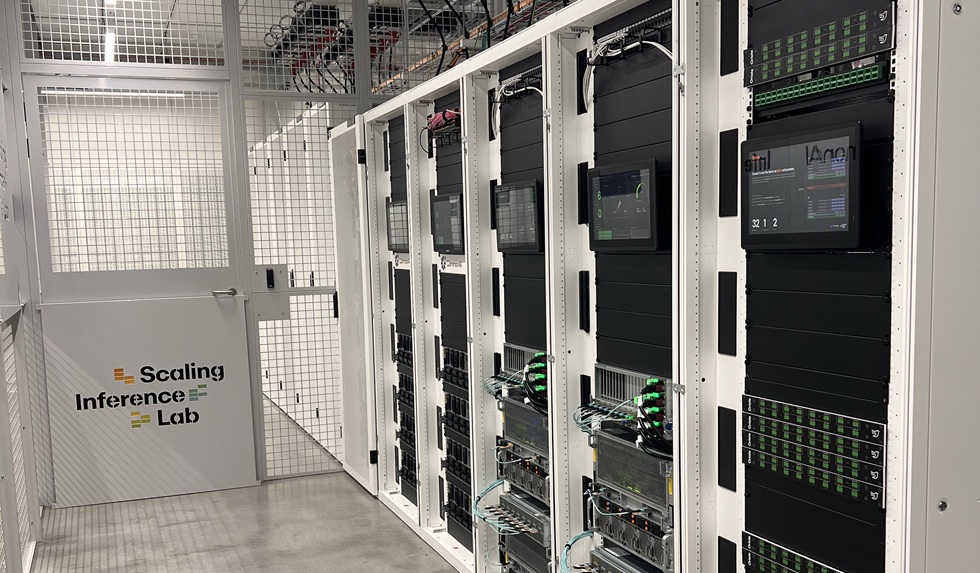
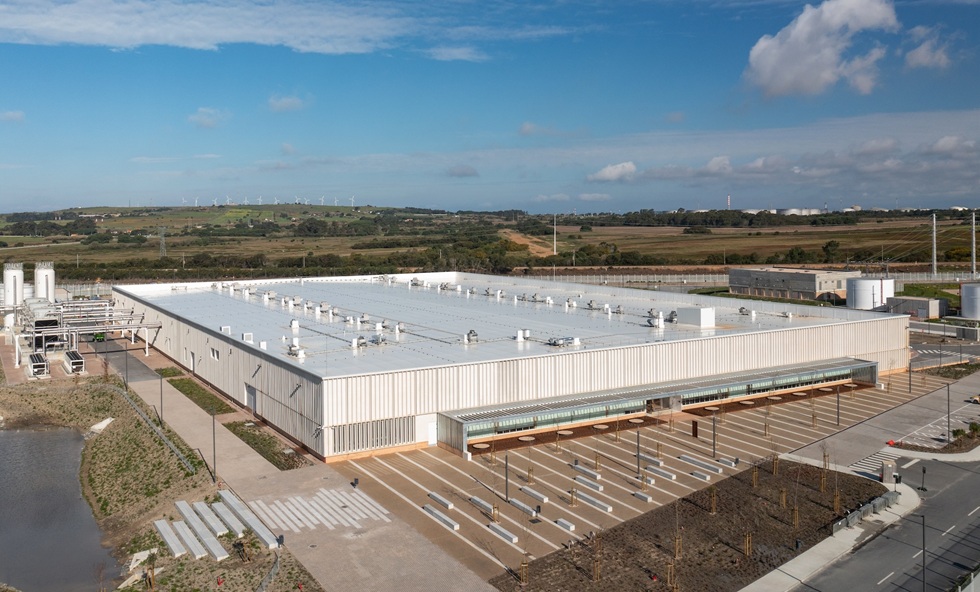
While much public discussion around AI continues to focus on models, applications and automation, those technologies ultimately depend upon increasingly complex physical infrastructure. Data centres, once viewed primarily as facilities for storage and computing, are increasingly being described as AI factories, environments designed to support highly intensive training and inference workloads at unprecedented scale.
Infrastructure becomes the strategic challenge
As AI systems grow more demanding, operators are facing mounting pressure around power availability, rack density, cooling requirements and infrastructure resilience. The challenge is no longer simply one of computing capacity. It is becoming a question of whether supporting infrastructure can scale quickly enough to meet demand.
This issue is expected to feature prominently in discussions during the congress. Schneider Electric executives will participate in sessions examining how the data centre ecosystem is responding to AI demand, including the emergence of neocloud providers and the differing infrastructure requirements of hyperscale, enterprise and new AI-focused deployments. The discussions will also explore how Europe can remain competitive as global investment in AI accelerates.
Alongside questions of competitiveness sits a growing concern around energy. The company will also host discussions focused on how operators can reduce the risks associated with major energy investments through stronger collaboration with utilities, local governments and infrastructure partners.
The prominence of these discussions highlights how AI infrastructure is becoming an economic and industrial policy issue as much as a technology challenge. Decisions around power generation, grid capacity and infrastructure planning are increasingly influencing where AI capacity can be built and how quickly new facilities can be deployed.
Designing the AI factory
The technologies Schneider Electric plans to demonstrate at the event provide an indication of how rapidly infrastructure requirements are evolving.
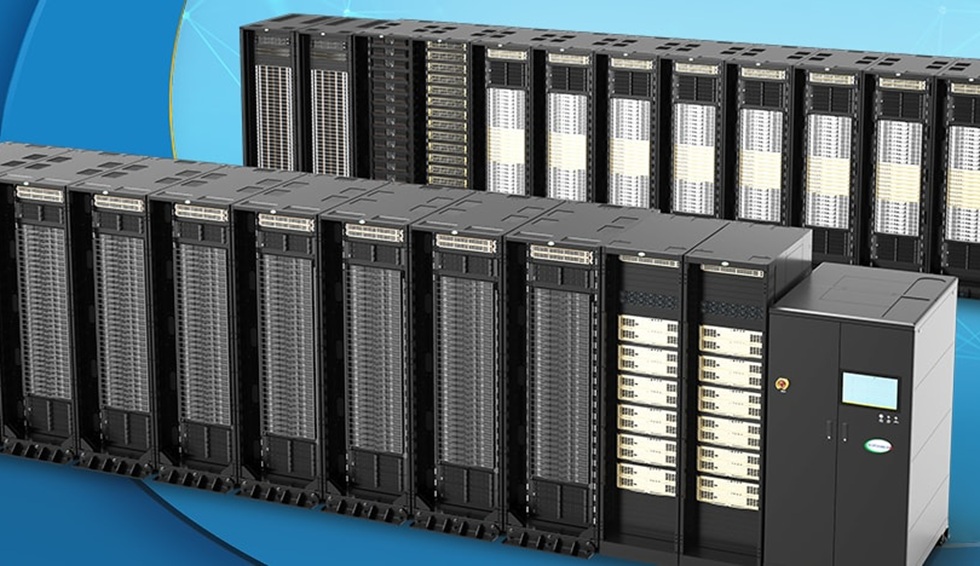
Among the technologies on display will be the company’s 800VDC architecture, digital twin technologies, NVIDIA reference designs for the GB300 NVL72 platform, and simulation capabilities designed to help organisations design, deploy and operate AI-ready infrastructure. The company will also demonstrate NVIDIA Omniverse integrations and Smart Spatial technologies intended to support planning and optimisation of future AI environments.
The growing emphasis on digital modelling reflects another significant trend. As AI facilities become larger and more complex, the ability to simulate infrastructure performance before deployment is becoming increasingly important. The cost and complexity of modern AI environments mean that design decisions now have substantial operational, financial and sustainability implications.
Cooling technology is also emerging as a critical area of innovation. Schneider Electric will showcase liquid cooling systems, including the MCDU-70 coolant distribution unit, designed to support data centres operating at gigawatt scale. Such technologies are becoming increasingly important as traditional air-cooling approaches struggle to accommodate the thermal demands of high-density AI workloads.
The company will also highlight software platforms, microgrid capabilities and data centre services designed to improve operational resilience and efficiency across digital infrastructure environments.
Taken together, the technologies and discussions planned for Datacloud Global Congress point towards a broader shift in how the industry views artificial intelligence. The next stage of AI development may not be defined solely by breakthroughs in models or applications. Instead, it may be determined by whether organisations can build the power systems, cooling infrastructure and operational architectures capable of supporting AI at industrial scale.
For much of the past decade, infrastructure was often treated as a supporting element of digital transformation. In the AI era, it is rapidly becoming the main event.