The path to practical quantum computing has long been defined by a series of unresolved engineering challenges, from fragile qubits to the persistent problem of error correction. What is now becoming clearer is that artificial intelligence may play a central role in overcoming these limitations, shifting the focus from purely quantum advances to hybrid systems that combine classical and quantum approaches.
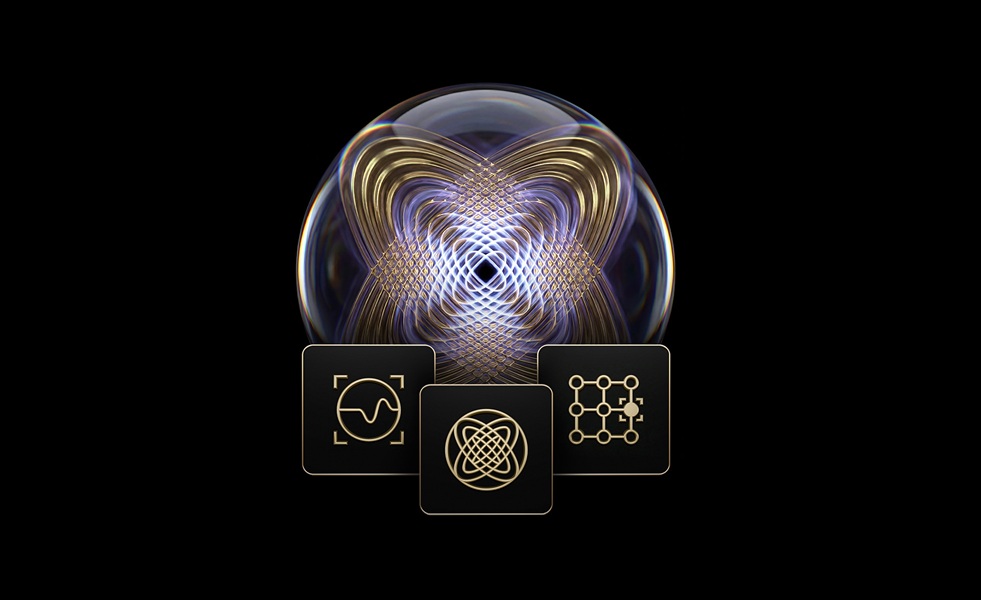
NVIDIA has moved to position AI at the centre of this transition with the launch of its Ising family of open models, designed to support quantum processor calibration and error correction. The models are intended to address two of the most significant barriers to scaling quantum systems, enabling researchers to improve performance and reliability as they work towards systems capable of running useful applications.
The development reflects a broader trend in which AI is increasingly used to manage and optimise complex physical systems. In the case of quantum computing, this involves interpreting large volumes of measurement data and responding in real time to maintain stability within highly sensitive environments.
AI tackles quantum fragility
Quantum processors are inherently unstable, with qubits prone to errors that can quickly accumulate and undermine computation. Addressing this requires continuous calibration and sophisticated error correction techniques, processes that have traditionally been time-consuming and computationally intensive.
The Ising models are designed to automate and accelerate these tasks. One component, focused on calibration, uses a vision language model to interpret measurements from quantum systems and adjust parameters dynamically. This is intended to reduce calibration times from days to hours, allowing systems to operate more efficiently.
A second component focuses on decoding, a critical part of quantum error correction. By applying neural network models optimised for speed or accuracy, the system is reported to deliver up to 2.5 times faster performance and three times higher accuracy compared with existing open source approaches. These improvements highlight the potential for AI to enhance the reliability of quantum systems, which remains a key requirement for scaling.
The models are being adopted by a range of organisations, including Fermi National Accelerator Laboratory, Harvard John A Paulson School of Engineering and Applied Sciences and the National Physical Laboratory, reflecting growing interest across both academic and industrial research communities.
Open models and hybrid systems
The decision to release these models as open source tools is also significant. By making them available to developers and researchers, NVIDIA is encouraging wider experimentation and adaptation, allowing organisations to tailor the models to specific hardware architectures and use cases. The models can be run locally, enabling users to retain control over proprietary data.
This approach aligns with the increasing complexity of quantum computing development, where progress depends on collaboration across multiple domains, including hardware design, software engineering and data science. The integration of AI into this process introduces a new layer of capability, enabling systems to adapt and improve continuously.
The Ising models are designed to work alongside NVIDIA’s broader quantum computing stack, including its CUDA-Q software platform and NVQLink hardware interconnect. Together, these components form part of an effort to create hybrid quantum classical systems, where AI manages the interaction between different types of computation.
The implications extend beyond immediate performance gains. As AI becomes embedded in the operation of quantum systems, it effectively takes on the role of a control layer, managing the conditions under which computation takes place. This represents a shift in how quantum computing is conceived, moving from isolated hardware challenges towards integrated systems that combine multiple technologies.
With the quantum computing market projected to grow significantly over the coming years, progress in areas such as calibration and error correction will be critical. The introduction of AI-driven approaches suggests that the future of quantum computing may depend as much on advances in artificial intelligence as on breakthroughs in quantum hardware itself.