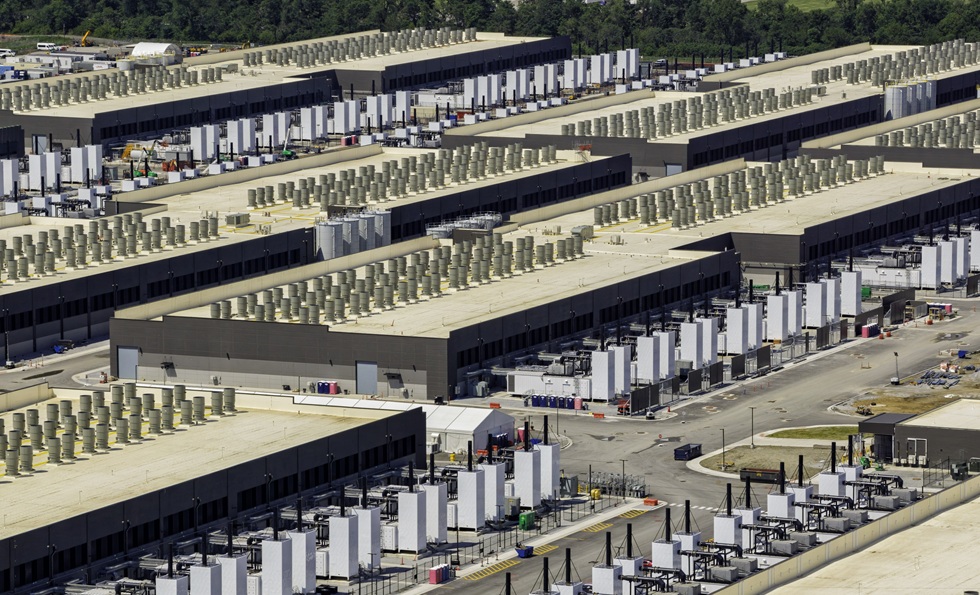
The rapid expansion of artificial intelligence is forcing a reassessment of how data centres are designed, powered and operated. As workloads grow more complex and power densities increase, the limitations of traditional infrastructure models are becoming increasingly visible, prompting a shift towards more open and flexible architectures.
Legrand is positioning itself within this transition through an expanded portfolio aligned with the Open Compute Project, which it will present at the OCP EMEA Summit in Barcelona later this month. The move reflects a broader industry effort to standardise and simplify the deployment of infrastructure capable of supporting AI and high performance computing at scale.
At the centre of this shift is a recognition that AI workloads are fundamentally different from those that shaped earlier generations of data centres. They require not only greater computational power, but also more dynamic, interconnected environments that can scale rapidly without introducing inefficiencies or delays. Conventional architectures, often built around proprietary systems and incremental upgrades, are struggling to keep pace with these demands.
Rethinking infrastructure for AI workloads
Open Compute Project architectures are increasingly seen as a response to these pressures. By promoting standardised, modular designs, they enable operators to deploy infrastructure more quickly while improving energy efficiency and simplifying integration across systems. This is particularly relevant as organisations seek to balance the demands of AI with constraints around power consumption and operational complexity.
Legrand’s OCP-aligned portfolio reflects these priorities. The company is introducing rack and power solutions designed to support higher density deployments, including ORv3-compliant systems capable of handling substantial loads and integrating power distribution more directly into the rack environment. The use of a 48VDC architecture is intended to simplify power delivery and remove conversion stages, a change that has implications for both efficiency and system design.
Cooling is also becoming a defining factor. As AI systems generate increasing levels of heat, traditional approaches are proving inadequate. The introduction of a rear door heat exchanger designed to connect directly to the rack’s DC busbar highlights how thermal management is being integrated more closely with power and compute infrastructure. This reflects a broader trend in which cooling is no longer a separate consideration, but an integral part of system architecture.
Open ecosystems and operational flexibility
Beyond hardware, the shift towards open architectures is also reshaping how infrastructure is managed and evolved over time. By reducing reliance on proprietary systems, operators gain greater flexibility to adapt their environments as workloads change. This is particularly important in the context of AI, where requirements can evolve rapidly as models and applications develop.
Legrand’s approach includes the integration of intelligent monitoring and control at the rack level, allowing operators to track environmental conditions and manage performance more effectively. While these capabilities are incremental in isolation, they contribute to a broader transformation in which infrastructure becomes more responsive and easier to scale.
The company’s move to Platinum membership within the Open Compute Project signals a deeper commitment to this collaborative model. It also reflects the growing importance of industry-wide coordination as organisations attempt to build infrastructure capable of supporting the next phase of AI adoption.
What is emerging is a shift in how data centre infrastructure is conceived. Rather than being built around fixed designs and long upgrade cycles, it is increasingly defined by adaptability, interoperability and speed of deployment. As AI continues to expand across enterprise and industrial environments, these characteristics are likely to determine which organisations are able to scale effectively and which remain constrained by the systems they have inherited.