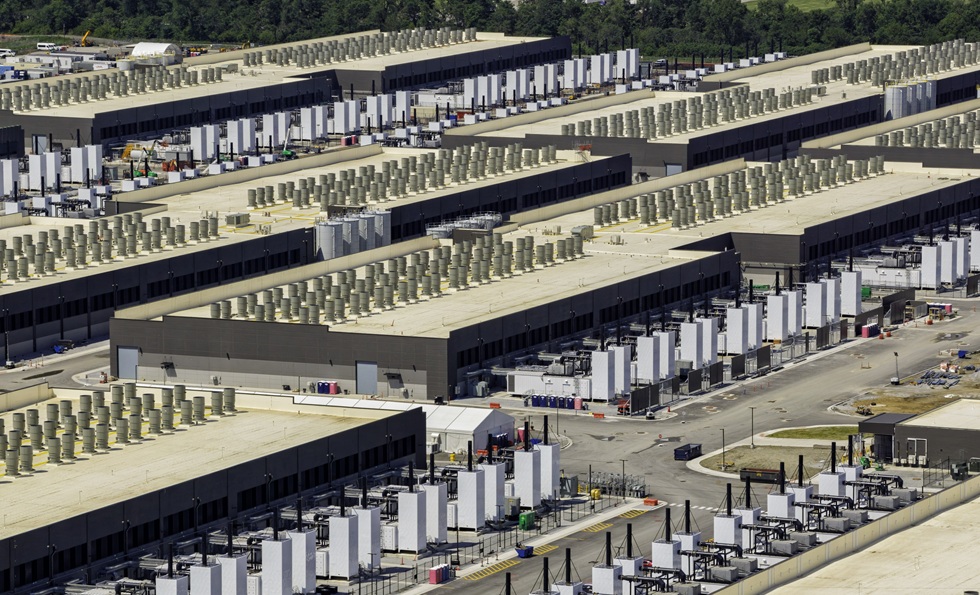
The race to scale artificial intelligence is exposing a constraint that has little to do with algorithms and everything to do with physics. As high performance computing and AI workloads push compute densities ever higher, heat has become one of the most critical bottlenecks shaping how data centres are designed, built and operated. The shift is forcing operators to rethink cooling not as a background utility, but as core AI infrastructure.
That reality sits behind the launch of a new range of coolant distribution units (CDU) from Motivair by Schneider Electric, aimed squarely at the demands of AI and HPC environments. The introduction of the MCDU-45 and MCDU-55 reflects a broader transition underway across digital infrastructure, where liquid cooling is moving from specialist use cases into the mainstream of AI factory design.
Schneider Electric acquired Motivair in February 2025, and these CDUs are the first new products to emerge since that deal. They are designed to address the growing thermal intensity of AI workloads, while also recognising that the physical layout of data centres is changing as operators look beyond traditional white space for cooling infrastructure.
Cooling becomes an AI design decision
The fundamental challenge is straightforward. AI workloads, particularly those built around accelerated computing, generate far more heat than conventional enterprise IT. Traditional air cooling struggles to keep pace as rack densities climb, pushing operators towards liquid cooling architectures that can deliver higher thermal efficiency.
The newly launched CDUs are purpose built for installation in utility corridors rather than solely within the white space itself. This reflects how operators are increasingly distributing cooling infrastructure across different parts of the facility to gain flexibility, reduce disruption to live environments and support more complex deployments.
Both the MCDU-45 and MCDU-55 offer wider operating ranges, allowing data centre operators to work with a broader set of chilled water temperatures. That capability is designed to help optimise chiller plant performance, reduce overall energy consumption and improve uptime. In an AI context, where compute availability directly translates into economic value, resilience and efficiency become inseparable.
The wider portfolio now spans models from MCDU-25 through to MCDU-60, alongside floor mounted and in rack units. This range allows operators to tailor cooling strategies to different AI infrastructure types, from hyperscale and colocation through to edge and retrofit environments. The underlying principle is adaptability as compute densities continue to rise and facility designs diversify.
Efficiency pressure meets operational reality
Energy efficiency remains one of the most sensitive issues in AI infrastructure. As AI factories scale, power consumption and cooling efficiency increasingly determine whether projects are economically viable. The new CDUs are positioned as part of a broader effort to improve plant level performance rather than isolated component efficiency.
By enabling precise flow control, real time monitoring and adaptive load balancing, the CDUs support more advanced thermal management strategies. These capabilities are designed to reduce operational costs while also improving power usage effectiveness, a metric under growing scrutiny as AI energy demand accelerates.
Maintenance and accessibility are also becoming strategic considerations. Locating CDUs outside the white space improves service access without interrupting AI workloads or IT operations. In facilities where downtime can carry significant financial penalties, this flexibility is increasingly valuable.
Andrew Bradner, Senior Vice President for the Cooling Business at Schneider Electric, framed the launch around the need for breadth rather than single point solutions. He said customers are demanding more diverse end to end cooling options that can align with a wide range of accelerated computing applications, while still delivering performance, reliability and future readiness.
Scaling for an AI driven future
The timing of the launch reflects the pace at which AI workloads are reshaping data centre requirements. Production of the new CDUs is set to ramp up in early 2026, with global availability already in place. That timeline aligns with continued expansion of AI infrastructure across hyperscale, enterprise and specialist HPC environments.
Rich Whitmore, Chief Executive of Motivair, positioned the new range as a response to the exponential growth of AI applications. He said the aim is to help operators navigate the AI era with confidence, delivering cooling solutions that adapt to any advanced data centre deployment while maintaining scalability, performance and reliability.
What is emerging is a clearer picture of how AI is redefining infrastructure priorities. Cooling is no longer an afterthought or a commodity layer beneath compute. It is becoming a design constraint, an efficiency lever and a competitive differentiator.
As AI factories proliferate and compute density continues to rise, the ability to manage heat efficiently will shape where AI can scale and at what cost. The introduction of purpose built CDUs for diverse deployment scenarios signals that the industry is beginning to treat cooling as foundational AI infrastructure, not just supporting hardware.